The number of confirmed deaths from China's coronavirus outbreak rose to 304, as authorities in hardest-hit Hubei province on Sunday reported 45 new fatalities.
In its daily update, figures from the provincial health commission also showed a sharp increase in confirmed infections in Hubei, with 1,921 new cases.
That puts the national total over 13,700, based on numbers previously issued by the central government.
The virus is believed to have emerged in December in the provincial capital of Wuhan in a market that sold wild game.
Cases of infections have spread beyond the province as Chinese people travelled across the country and the world for the Lunar New Year holiday that started last week.
China found itself increasingly isolated over the weekend, with the United States and Australia leading a growing list of nations to impose extraordinary Chinese travel bans.
The epidemic has ballooned into a global health emergency with cases in more than 20 countries.
A study by British and American scientists revealed that a massive sheet of ice known as the "doomsday glacier" is melting faster than experts previously believed—edging the world closer to a possible sea-level rise of more than 10 feet.
Researchers at New York University and the British Antarctic Survey drilled through nearly 2,000 feet of ice in the Thwaites glacier in West Antarctica, to measure temperatures at the 75-mile wide ice sheet's "grounding line," where the ice meets the ocean.
The water just beneath the ice was found to be 32º Fahrenheit—more than 2º above freezing temperature in the Antarctic region.
The findings have "huge implications for global sea level rise," NYU scientist David Holland said in a statement.
350.org co-founder and author Bill McKibben was among the climate action campaigners who expressed alarm over the new study.
"Oh, damn," McKibben wrote on social media.
The researchers expressed concern that the water beneath the glacier could be even warmer in other areas.
Scientists refer to Thwaites as the "doomsday glacier" due to the dire implications its rapid melting could have for the planet. Though a 10-foot sea-level rise would likely take years, the melting of the glacier could eventually mean the U.S. would lose 28,800 square miles of coastal land—pushing 12.3 million people currently living in those areas out of their homes.
"Warm waters in this part of the world, as remote as they may seem, should serve as a warning to all of us about the potential dire changes to the planet brought about by climate change," Holland said.
The Thwaites glacier has lost 600 billion tons of ice over the past several decades, accelerating to as many as 50 billion tons per year in recent years.
"There is very warm water there, and clearly, it could not have been there forever, or the glacier could not be there," Holland told the Washington Post of the recent findings, suggesting the water has gotten warmer recently.
Scientists are especially concerned about the Thwaites because its configuration is an example of "marine ice sheet instability."
As Chris Mooney wrote at the Post:
Thwaites gets deeper and thicker from its oceanfront region back into its interior in the heart of West Antarctica. This is known to be an unstable configuration for a glacier, because as the ocean continues to eat away at its base, the glacier becomes thicker, so more ice is exposed to the ocean. In turn, that ice flows outward faster.
BBC released a short video detailing the scientists' journey to the Thwaites glacier and their findings.
"The ice rises almost a mile from the sea bed and it's collapsing into the sea at two miles a year," the narration explains. "If Thwaites melts, it will increase sea levels worldwide by half a meter. But it sits in the middle of the Antarctic ice sheet and there's three meters more of sea level rise locked up in there."
"That is really, really bad," Holland told the Post of the most recent discovery. "That's not a sustainable situation for that glacier."
Palestinian Authority leader Mahmoud Abbas announced the suspension of relations, including security cooperation, with both Israel and the United States on Saturday, days after the unveiling of a US peace plan that Palestinians say heavily favors Israel.
Palestinian President Mahmoud Abbas threatened to cut security ties with both Israel and the U.S. on Saturday, in a lengthy speech delivered at an Arab League meeting in Egypt's capital that denounced a White House plan for ending the Israeli-Palestinian conflict.
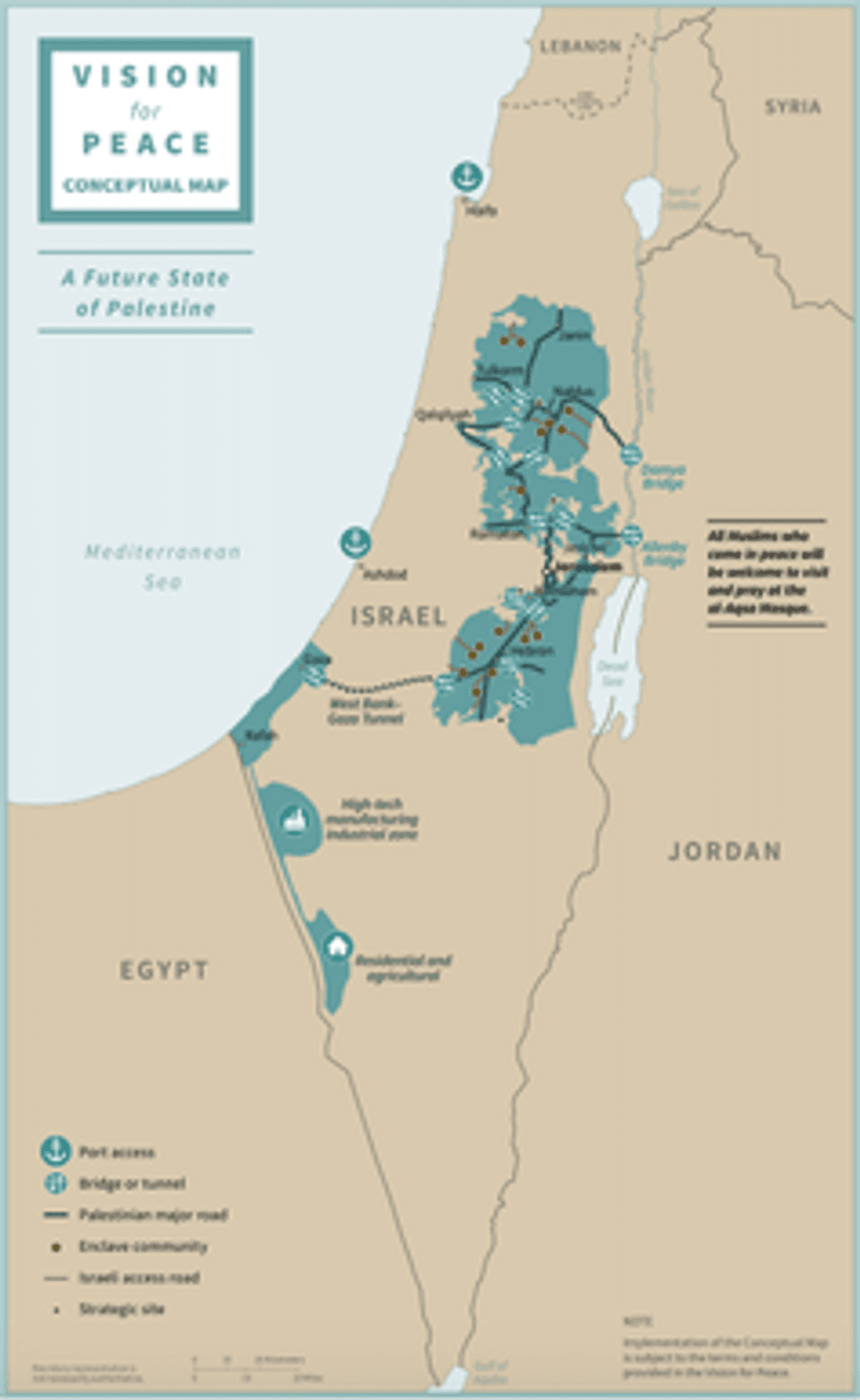
The U.S. plan would grant the Palestinians limited self-rule in parts of the occupied West Bank, while allowing Israel to annex all its settlements there and keep nearly all of east Jerusalem.
The summit of Arab foreign ministers in Cairo was requested by the Palestinians, who responded angrily to the American proposal.
Abbas said that he told Israel and the U.S. that “there will be no relations with them, including the security ties" following the deal that Palestinians say heavily favors Israel.
There was no immediate comment from U.S. or Israeli officials.
The Palestinian leader said that he'd refused to take U.S. President Donald Trump's phone calls and messages “because I know that he would use that to say he consulted us.”
“I will never accept this solution," Abbas said. “I will not have it recorded in my history that I have sold Jerusalem."
He said the Palestinians remain committed to ending the Israeli occupation and establishing a state with its capital in east Jerusalem.
Abbas said that the Palestinians wouldn't accept the U.S. as a sole mediator in any negotiations with Israel. He said they would go to the United Nations Security Council and other world and regional organizations to “explain our position."
The Arab League’s head, Ahmed Aboul-Gheit, said the proposal revealed a “sharp turn” in the long-standing U.S. foreign policy regarding the Israeli-Palestinian conflict.
“This turn does not help achieve peace and a just solution,” he declared.
Aboul-Gheit said that the Palestinians reject the proposal. He called for the two sides, the Israelis and the Palestinians, to negotiate to reach a “satisfactory solution for both of them.”
President Trump unveiled the long-awaited proposal Tuesday in Washington. It would allow Israel to annex all its West Bank settlements - which the Palestinians and most of the international community view as illegal - as well as the Jordan Valley, which accounts for roughly a fourth of the West Bank.
In return, the Palestinians would be granted statehood in Gaza, scattered chunks of the West Bank and some neighborhoods on the outskirts of Jerusalem, all linked together by a new network of roads, bridges and tunnels. Israel would control the state’s borders and airspace and maintain overall security authority. Critics of the plan say this would rob Palestinian statehood of any meaning.
The plan would abolish the right of return for Palestinian refugees displaced by the 1948 war and their descendants, a key Palestinian demand. The entire agreement would be contingent on Gaza’s Hamas rulers and other armed groups disarming, something they have always adamantly rejected.
Ambassadors from the United Arab Emirates, Bahrain and Oman attended the Tuesday unveiling in Washington, in a tacit sign of support for the U.S. initiative.
Saudi Arabia and Egypt, Arab states that are close U.S. allies, said they appreciated President Trump’s efforts and called for renewed negotiations without commenting on the plan’s content.
Egypt urged in a statement Israelis and Palestinians to “carefully study” the plan. It said it favors a solution that restores all the “legitimate rights” of the Palestinian people through establishing an “independent and sovereign state on the occupied Palestinian territories.”
The Egyptian statement did not mention the long-held Arab demand of east Jerusalem as a capital to the future Palestinian state, as Cairo usually has its statements related to the Palestinian-Israeli conflict.
Jordan, meanwhile, warned against any Israeli “annexation of Palestinian lands” and reaffirmed its commitment to the creation of a Palestinian state along the 1967 lines, which would include all the West Bank and Israeli-annexed east Jerusalem.
Jordan and Egypt are the only two Arab countries that have peace treaties with Israel.
A scientific expedition to the Galapagos Islands has discovered a tortoise with a "strong" genetic link to a presumed-extinct subspecies made famous by the popular Lonesome George, national park officials said Friday.
George, the last known member of the Chelonoidis nigra abingdonii Pinta tortoise species, died in 2012 in captivity aged over 100 after refusing to provide any offspring.
The Galapagos National Parks (PNG) said the expedition had discovered a young, female specimen deemed "a high-importance find because it has a strong genetic component of the species 'Chelonoidis abingdonii.'"
She "could be a direct descendant of a pure individual, which could still be alive somewhere," the park said.
Park rangers and scientists from PNG and the Galapagos Conservancy found an additional 29 tortoises -- 11 males and 18 females -- that share part of their genetic makeup with the Chelonoidis niger Floreana subspecies, also thought to be extinct.
Researchers chose Wolf Volcano for their expedition because whalers and pirates who would eat the animals were thought to have dumped some of the tortoises there in the past to lighten their ships' loads.
The Galapagos Islands, located 620 miles (1,000 kilometers) off the coast of Ecuador in the Pacific Ocean, were made famous by Charles Darwin's studies of their breathtaking biodiversity.
The park says there are 10,000 to 12,000 tortoises on the volcano.
Photo: Lonely George, the last giant tortoise of the Pinta species, is seen at Galapagos National Park on Santa Cruz Island in June 2006
From the polar ice cap to the Mariana Trench 10 kilometres below the waves, synthetic microfibres spat out by household washing machines are polluting oceans everywhere.
The world has woken up over the last year to the scourge of single-use plastics, from bottles and straws to ear swabs and throw-away bags, resulting in legislation to restrict or ban their use in dozens of countries.
A lot of this visible debris winds up in the sea, where it gathers in huge floating islands called gyres, entangles wildlife from turtles to terns, and hangs suspended in water like dead jellyfish.
But a major source of marine pollution -- microscopic bits of polyester, nylon and acrylic -- has up to now gone largely unnoticed, experts say.
Most people don't realise it, but "the majority of our clothes are made from plastic," said Imogen Napper, a researcher at the University of Plymouth.
"We wash our clothes regularly, and hundreds of thousands of fibres come off per wash," she told AFP, "This could be one of the main sources of the plastic pollution into the environment."
"How do we remove something that is so small?", she added.
A 2015 report from the Ellen McArthur foundation estimated that half-a-million tonnes of microfibres leached into waterways every year, with 53 million tonnes of new textiles produced annually.
The average family in the United States and Canada unleashes more than 500 million microfibres into the environment each year, according to the Ocean Wise organisation.
- Buy less clothing -
The vast majority of those minuscule bits of textile -- whether synthetic or not -- are intercepted during water treatment, but nearly 900 tonnes winds up in the ocean all the same.
In less developed countries, however, far more of those particles will not get intercepted, adding to the flood of plastic streaming into the sea.
Microplastics, say marine biologists, are almost certainly as harmful to microscopic ocean creatures as flimsy shopping sacs are to sea turtles.
But forensic clues are hard to come by, explains Peter Ross, co-author of the Ocean Wise report.
"The evidence disappears quickly, with weak or dead micro-organisms eaten by other species," he explained.
AFP/File / Gillian HANDYSIDE Recent research has focused on how to reduce the volume of micro-pollution shed when we wash clothes
Recent research has focused on how to reduce the volume of micro-pollution shed when we wash clothes -- besides the obvious step of simply washing them less often.
"When you do the laundry, you can reduce the impact by lowering the temperature -- above 30 degrees Celsius textiles break down more easily," said Laura Diaz Sanchez, a campaigner for NGO Plastic Soup Foundation.
"Liquid detergent is better than powder, which has a scrubbing effect," she added. "Also, don't use a dryer."
Buying less clothing is likewise important: studies have shown first-time washings release by far the most microfibres.
"This is something we can stop," insisted Mojca Zupan, founder of the Slovenian-based startup PlanetCare.
"Your car has filters, your washing machine should have them too," she said, explaining how the ones she makes -- endorsed by the Plastic Soup Foundation -- are self-installing. "Every machine made from now on should be neutral to the environment."
- 'Fast fashion' culture -
There are other laundry gadgets that make environmental claims, some of them contested.
Spiky laundry balls -- themselves made of plastic -- and mesh bags to contain a load are also promoted as eco-friendly accessories for use in dryers.
"It may be useful to stop big entanglements but it doesn't do anything for tiny fibres," said Francesca de Falco, a researcher at the Institute for Polymers, Composites and Biomaterials in Italy.
Bottom line? There are no miracle solutions. "The only one would be to not wear any clothes at all," said Sanchez.
AFP/File / Manan VATSYAYANA Buying less clothes also decreases microfibre pollution because first-time washings release by far the most microfibres
The best approach to tackle the problem is with separate solutions tailored to each step of the process -- clothing manufacture, washing, and treatment plants, said de Falco.
Each synthetic material has properties, such as the way in which it is woven, that may have an impact.
In an effort to do better, some brands work with scientists to test clothes particularly prone to shedding microplastics, such as down jackets and stretch T-shirts.
Are natural fibres the answer? Not so simple, experts say. Cotton, for example, requires huge quantities of water and pesticide when grown.
"Switching to natural alternatives is not really the answer because it can be very expensive and they have their own environmental problems," said Napper.
"We live in a 'fast fashion' culture -- when you consider how much we actually buy, it is quite scary."
Britain began an uncertain future outside the European Union on Saturday after the country greeted the historic end to almost half a century of EU membership with a mixture of joy and sadness.
There were celebrations and tears on Friday as the EU's often reluctant member became the first to leave an organisation set up to forge unity among nations after the horrors of World War II.
Little has changed as of Saturday as the UK is now in an 11-month transition period negotiated as part of the divorce.
Britons will be able to work in the EU and trade freely -- and vice versa -- until December 31, although the UK will no longer be represented in the bloc's institutions.
But legally, Britain is out.
Thousands of people waving Union Jack flags packed London's Parliament Square and sang the national anthem to mark that reality as Brexit became law at 11 pm (2300 GMT) -- midnight in Brussels.
AFP / Tolga AKMEN A digital Brexit countdown clock was projected onto the front of 10 Downing Street, the official residence of Britain's Prime Minister
Prime Minister Boris Johnson -- a figurehead in the seismic 2016 referendum vote to leave -- held a private party in his Downing Street office with a clock projected on the walls outside counting down the minutes to departure.
In an address to the nation, he hailed a "new era of friendly cooperation" acknowledging there could be "bumps in the road ahead" but predicting the country could make it a "stunning success".
"The most important thing to say tonight is that this is not an end but a beginning," he said.
At a "Big Brexit Bash" in the market town of Morley, northern England, Raymond Stott said he was "glad it's all over" after years of political gridlock and acrimony.
"We will look after ourselves. We don't need Europe," said the 66-year-old.
- Deep divisions -
However, Brexit has exposed deep divisions in British society and many fear the consequences of ending 47 years of ties with their nearest neighbours.
AFP / DANIEL LEAL-OLIVAS Britain will be starting a new but uncertain chapter
Some pro-Europeans, including many of the 3.6 million EU citizens who have made their lives in Britain, marked the occasion with candlelit gatherings.
There was a sombre atmosphere among passengers on one of the last ferries to leave the European mainland pre-Brexit and make the 42-kilometre (26-mile) journey across the English Channel.
"It's very depressing what's happening today," said Alessio Bortone, an Italian who has lived in Britain for 10 years.
Some Britons in southern Spain celebrated in bars but for many pro-Europeans Friday marked a day they hoped would never come.
Brexit has also provoked soul-searching in the EU about its future after losing a country of 66 million people with global diplomatic clout and the financial centre of the City of London.
French President Emmanuel Macron described it as a "historic warning sign" that should force the EU and its remaining nations of more than 440 million people to stop and reflect.
AFP / DANIEL LEAL-OLIVAS Thousands of people waving Union Jack flags packed London's Parliament Square to mark the moment of Brexit at 11 pm
Britain's diplomatic mission in Brussels sent an employee out early on Saturday to change the building's nameplate to read "UK Mission to the European Union", signalling its new non-member status.
Meanwhile, Joao Vale de Almeida, the newly named EU ambassador to Britain, said on Twitter he looked forward to "laying the foundations for a solid EU/UK relationship".
- Trade talks loom -
While the divorce terms have been agreed, Britain must still strike an agreement on future relations with the EU, its largest trading partner.
AFP / Gillian HANDYSIDE Brexit: what happens next?
Both will set out their negotiating positions on Monday.
But Johnson, a polarising figure accused of glossing over the complexity of leaving the EU, has given himself just 11 months to negotiate the new partnership -- not enough time, according to his critics.
London is now free to strike trade deals around the world, including with the United States, where US President Donald Trump is an enthusiastic supporter of Brexit.
One of his top envoys on Friday hailed an "exciting new era".
At a special Brexit day ministers' meeting in Sunderland in northeast England, Johnson discussed an aim to get 80 percent of Britain's commerce covered by free trade agreements within three years, a spokesman said.
Julian Braithwaite, UK Permanent Representative to the WTO in Geneva, said on Saturday he had formally notified all members of Britain's EU departure.
"The UK will now represent itself in the WTO, supporting the global trading system which we were instrumental in founding, and advancing our economic interests," he tweeted.
- 'Goodbye & good luck' -
Getting to this point has been a traumatic process.
Britain resisted many EU projects over the years, refusing to join the single currency or the Schengen open travel area, and eurosceptics have long complained about Brussels bureaucracy.
Worries about mass immigration added further fuel to the Brexit campaign while for some, the 2016 vote was a chance to punish the government for years of cuts to public spending.
AFP / Tolga AKMEN Brexit unleashed political chaos in London, sparking years of bitter arguments that paralysed parliament and forced the resignations of two prime ministers
But the result was still a huge shock.
It unleashed a period of toxic social and political division that paralysed parliament and forced the resignations of prime ministers David Cameron and Theresa May.
Johnson's decisive election victory in December changed the dynamics, giving him the parliamentary majority needed to ratify his Brexit deal.
Yet Britons appear as divided as they were nearly four years ago, when 52 percent voted to leave and 48 percent voted to remain in the EU.
"Rise and shine... It's a glorious new Britain," said the Brexit-supporting Daily Express. The i newspaper, in contrast, headlined: "What next?"
In Scotland, where a majority voted to remain in 2016, Brexit has revived calls for independence.
First Minister Nicola Sturgeon tweeted: "Scotland will return to the heart of Europe as an independent country -- #LeaveALightOnForScotland."
In Northern Ireland -- soon to be a new EU frontier -- there are fears Brexit could destabilise a hard-won peace after decades of conflict over British rule.
"They're going to have problems probably, sorting everything out with the border up the Irish Sea," said Thomas Glover, 77, alluding to possible trade frictions between mainland Britain and the divided island.
"I hope we can make the new realities work," Irish foreign minister Simon Coveney tweeted, adding: "Goodbye & good luck."
China faced deepening isolation over its coronavirus epidemic on Saturday as the death toll soared to 259, with the United States and Australia leading a growing list of nations to impose extraordinary Chinese travel bans.
With Britain, Russia and Sweden among the countries confirming their first infections, the virus has now spread to more than two dozen nations, sending governments scurrying to limit their exposure.
The United States toughened its stance Friday by declaring a national emergency, temporarily barring entry to foreigners who had been in China within the past two weeks.
AFP / Hector RETAMAL At the epicentre of the deadly epidemic, China's Wuhan city, hospitals are overwhelmed
"Foreign nationals, other than immediate family of US citizens and permanent residents, who have travelled in China within the last 14 days will be denied entry into the United States," Health Secretary Alex Azar said.
Australia said it was barring entry to non-citizens arriving from China, while Australian citizens who had travelled there would be required to go into "self-isolation" for two weeks.
Vietnam suspended all flights from mainland China, Hong Kong and Taiwan effective from Saturday.
Similar expansive restrictions have been announced by countries including Italy, Singapore, and China's northern neighbour Mongolia.
The United States, Japan, Britain, Germany and other nations had already advised their citizens not to travel to China.
- 'Unkind' -
Beijing insists it can contain the virus and called Washington's advice against travel to China "unkind".
AFP / Mladen ANTONOV Commuters in Bangkok. Face masks are in short supply across many parts of Asia
"Certainly it is not a gesture of goodwill," foreign ministry spokeswoman Hua Chunying said.
The US emergency declaration also requires Americans returning from the ground zero Chinese province of Hubei to be placed in mandatory 14-day quarantine, and health screening for American citizens coming from other parts of China.
The virus emerged in early December and has been traced to a market in Hubei's capital Wuhan that sold wild animals.
It spread globally on the wings of a Lunar New Year holiday rush that sees hundreds of millions of Chinese people travel domestically and overseas.
In a bid to stop the contagion, the government has extended the holiday through this weekend and urged people to avoid public gatherings.
Many provinces and cities have called on companies to remain closed for another week after the holiday ends on Monday.
The economic fallout continued Saturday as Apple announced that its China stores would be closed until February 9, "out of an abundance of caution and based on the latest advice from leading health experts."
- Mea culpa -
With public anger mounting in China, Wuhan's top official admitted late Friday that authorities there had acted too slowly, expressing "remorse and self-reproach".
AFP / John SAEKI
"If strict control measures had been taken earlier the result would have been better than now," Ma Guoqiang, the Communist Party chief for Wuhan, told state media.
Wuhan officials have been criticised online for withholding information about the outbreak until late December despite knowing of it weeks earlier.
China finally lurched into action last week, effectively quarantining whole cities in Hubei and tens of millions of people.
Unprecedented safeguards imposed nationwide include postponing the return to school, cutting bus and train routes, and tightening health screening on travellers nationwide.
But the toll keeps mounting at an ever-increasing pace, with health authorities on Saturday saying 46 more people had died in the preceding 24 hours, all but one in Hubei.
AFP / Alex McBride Temperature screenings for the virus at an airport in South Sudan
Another 2,102 new infections were also confirmed, bringing the total to nearly 12,000 -- far higher than the Severe Acute Respiratory Syndrome outbreak of 2002-03.
SARS, which is caused by a pathogen similar to the new coronavirus and also originated in China, killed 774 people worldwide -- most of them in mainland China and Hong Kong.
The World Health Organization declared the outbreak a global emergency on Thursday but did not advise international trade or travel restrictions.
It warned Friday that closing borders was probably ineffective in halting transmission and could accelerate the virus's spread.
But authorities around the world pressed ahead with preventive measures.
- 'Latent racism' -
Thai health officials on Friday said a taxi driver became the kingdom's first case of human-to-human transmission.
AFP / DALE DE LA REY The virus is starting to have an impact on economies around the world
Thailand joins China, Germany, Japan, France and the United States with confirmed domestic infections.
The health crisis has dented China's international image and put Chinese nationals in difficult positions abroad, with complaints of racism.
More than 40,000 workers at a vast Chinese-controlled industrial park in Indonesia -- which also employs 5,000 staff from China -- were put under quarantine, the facility said on Friday.
On the same day, China flew overseas Hubei residents back to the centre of the outbreak in Wuhan on chartered planes from Thailand and Malaysia, citing "practical difficulties" the passengers had encountered overseas.
Countries have scrambled to evacuate their nationals from Wuhan, with hundreds of US, Japanese, British, French, South Korean, Indian and Mongolian citizens evacuated so far, and more countries planning airlifts.
Russia said it would evacuate more than 2,500 of its citizens holidaying on China's Hainan island, far from the epicenter.
Photo: Man Wears Plastic Bottle to protect against coronavirus
January 28, 2020, is a date that will be remembered in Middle Eastern history – but it will take some time before anyone knows for sure how it will be remembered.
The day didn’t start well for Benjamin Netanyahu. Israel’s longest-serving prime minister also became the country’s first prime minister to be indicted while still in office. He faces multiple charges of corruption.
But Netanyahu didn’t have much time to sulk. Just a few hours later, he was standing alongside Donald Trump as the pair unveiled the U.S. administration’s long-anticipated plan for Israeli-Palestinian peace, written in no small part in coordination with – and deeply in tune with – Netanyahu’s policies.
The fact that the plan’s unveiling came as both men face intense domestic scrutiny – the press conference interrupted coverage of Trump’s impeachment – should not be overlooked.
I have been following developments in the Middle East for a long time as a U.S. State Department official, a lifelong student and now a professor of Israeli history, and as a dual citizen of the U.S. and Israel. I know how complex the issues are and how past attempts at peace have fallen well short.
In black and white …
Trump’s plan comprises two different goals.
The first – fostering Israeli-Palestinian peace, or at least coexistence – is there in black and white for all to read.
The second – tying Trump and Netanyahu’s respective domestic critics into knots – is everywhere between the lines.
While the Trump administration worked on the plan in coordination with Israel and “friendly” Arab states like Egypt and Saudi Arabia, it crucially did not involve the Palestinians. Palestinian resistance to the very development of this plan – out of suspicion, weakness and resentment – was met not with a carrot but a stick, with the U.S. cutting all aid to Gaza and the West Bank in February 2019.
As a result, positions in the plan that might have been viewed as difficult compromises, had they been negotiated, are instead rightly seen as terms of surrender. Yes, the plan gives Palestinians a path to limited statehood, but only after ceding on the core issues of Israeli settlements, refugees and control of much of Jerusalem.
The plan was successfully kept behind the curtains while being drafted, but it now steps out onto a complicated stage.
Relations between Israel and the Palestinian Authority in the West Bank have for some years been in utter political stalemate, even as the two have maintained working-level security cooperation. In Hamas-run Gaza, Israel has been in a long war of attrition, mixing ongoing less-than-total violence with tacit mutual understandings aimed at managing the conflict.
Meanwhile, Israel’s ties with several Sunni Arab states, especially in the Gulf, have been deepening, united by a desire to ward off Iran and its Shia proxies in Lebanon and what remains of Syria. Jordan, structurally weak but strategically important due to its location and links to Arab and Islamic actors, balances contending forces with skill and jitters.
Internal Palestinian politics are riven by the bitter rivalry between the nationalist Palestinian Authority and the Islamist group Hamas and by discontent with the Palestinian Authority’s President Mahmoud Abbas’ hold on power amid claims of corruption and mismanagement in the Palestinian semi-government.
Many Israelis are alienated by Netanyahu’s endless legal troubles and divisive politics, but others are kindled by his attacks on political opponents. Meanwhile the Israeli left has failed to recover the credibility it lost on security issues following the collapse of 2000’s Camp David talks and the ensuing Second Intifada.
As for Trump, he remains popular in Israel – including among centrists, who don’t necessarily follow day-to-day U.S. politics and look unfavorably on former President Barack Obama’s handling of the Middle East.
At home, Trump’s policies on Israel do not reflect that of the majority of American Jews, who tend to be politically liberal and supportive of a mutually negotiated two-state solution. Rather, Trump’s views chime with that of the smaller but more fervent American Jewish right, and above all with the millions of evangelicals who are a key plank of the president’s base.
Into all this drops the 180-page peace plan – whose heart is creating a legally recognized but geographically tiny and fragmented Palestinian state without full military powers – something that falls way short of Palestinian aspirations. Some parts of the plan are not unreasonable, and the many failed attempts at peacemaking to date call for fresh thinking. But the problems in this plan are very real.
It stakes out strong positions on the three hard issues that have bedeviled negotiations time and again: Israeli settlements, the status of Jerusalem and the right of return for Palestinian refugees.
The Trump plan leaves all Israeli settlements in place and proposes a networks of roads and tunnels to help Palestinian move around the cantons that would make up their state.
It also freezes Jerusalem’s status quo and makes permanent Israel’s security barrier between the city’s east and west. As for the Palestinians who fled or were forced out of their homes in the 1948 war and their descendants, the plan says they are to be financially compensated. A few will be absorbed into Israel, but most will be integrated into either the envisioned Palestinian state or their current country of residence – which includes the Arab states that have refused to absorb them to date.
These stances will be politically helpful to Netanyahu and congenial to many Israelis, who want to end the country’s occupation of the Palestinians, if their own personal security can be assured.
To the Palestinians, they represent bitter pills, each of which would be hard enough to swallow on its own.
Reaction to the plan has led to talk of a possible reconciliation between the Palestinian Authority and Hamas, something Israel has been trying to avoid – and put security forces on alert for further violence.
Another problem is in the thinking that is evident in the plan’s title, “Peace to Prosperity.” Blueprints for economic development are woven throughout. The ideas are laudable. But the notion that the most fervently committed Jews and Arabs will trade away their deepest convictions for financial gain is as unlikely to take hold now as it did in the Oslo Accords of the 1990s.
… and red lines all over
So what happens now?
Netanyahu has announced he will begin to annex territory, in a move his main political challenger, former Army Chief of Staff Benny Gantz, described as “reckless and irresponsible,” even as he says he accepts the plan’s broad outlines for an eventual settlement. The Palestinians for their part have rejected the proposals and taken to the streets in protest.
The plan raises some serious, immediate questions: How much unilateral action will Netanyahu take without paying a domestic price – especially with Israelis returning to the polls in March? And what responses are open to the Palestinians, other than the tried-and-failed turns to violence and appeals to the U.N. – neither of which will move Israeli public opinion in their direction?
Above all, the questions we should be asking are: What does this or any plan do concretely to improve the lives of people in the region? What practical steps could be taken to make viable coexistence – peace is too strong a word – further down the line possible or at least avert new violence triggered by thwarted expectations?
There is no easy solution to the bitter Israel-Palestinian conflict. Unilateral annexation by Israel will only further Palestinian resentment and rejectionism. Too many people, in Washington as well as the Middle East, view the conflict in terms of ideological dreams and agendas, paying little heed to the real needs of people on the ground, Israeli and Palestinian alike. Should this plan become, like so many of its predecessors, a political football on both sides of the ocean, the people who make their homes and live their lives on politicians’ playing fields will lose.
US President Donald Trump's administration on Friday lifted US restrictions on landmines, saying new technology made them safer, outraging campaigners for the abolition of the explosives that maim thousands of civilians each year.
In the latest reversal of a policy of his predecessor Barack Obama, Trump gave the green light to a new generation of "non-persistent" landmines that can be switched off or destroyed remotely rather than staying active in the ground forever.
"The Department of Defense has determined that restrictions imposed on American forces by the Obama administration's policy could place them at a severe disadvantage during a conflict against our adversaries," a White House statement said.
"The president is unwilling to accept this risk to our troops... President Trump is rebuilding our military, and it is stronger than ever."
Obama in 2014 banned the use of anti-personnel landmines with the exception, under pressure from military planners, of the Korean peninsula where the explosives dot the last Cold War frontier with North Korea.
Obama also ordered the destruction of anti-personnel stockpiles not designed to defend South Korea and said the United States would not cooperate with other nations in developing landmines.
The White House said the US military will now be free to deploy landmines around the world "in exceptional circumstances."
Self-destructing mines
In rescinding the White House directive, the Trump administration said policy would now be set by the Pentagon, which said it was still prohibiting traditional landmines that cannot be turned off or destroyed remotely.
The new mines are set to self-destruct within 30 days but can be destroyed in as little as two hours if necessary, Vic Mercado, the Pentagon official in charge of the policy, told reporters.
In his estimation, there is only a six in a million chance that the self-destruction system will fail.
Defense Secretary Mark Esper said that the United States took into account the safety of civilians but considered landmines among the "important tools" for the military.
"At the end of day, we want to make sure that we have all the tools in our toolkit that are legally available and effective to ensure our success and to ensure the protection of our soldiers, sailors, airmen, Marines," he told reporters.
'Death sentence for civilians'
Handicap International, a French-based aid and pressure group for people disabled by conflict, said it was "revolted" by Trump's decision.
"Trump's announcement on anti-personnel mines is a death sentence for civilians," said Anne Hery, the group's advocacy director. "There are acts of war that are simply outside all rules. Mines belong to that category."
Representative Jim McGovern, a Democrat active on human rights issues, fired off a letter to the Pentagon voicing alarm at the change.
Any self-destructing mines need to have humans in control, considering that modern battlefields and civilian populations move so quickly, he said.
"I am proud that the United States is no longer a source of injuries and deaths caused by this indiscriminate weapon. The world is better for it," he wrote.
"I urge you, in the strongest terms possible, not to undo decades of precedent on anti-personnel landmines."
The Arms Control Association, a Washington-based research and advocacy group, said that "smart" landmines have failed to work and been rejected by all NATO allies of the United States.
"The world has moved on from the use of landmines. The United States should, too," said Jeff Abramson, a senior fellow at the association.
More than 160 countries, including most of the Western world, are party to the 1999 Ottawa Convention that aims to eliminate anti-personnel mines. Major outliers include the United States, Russia and China, as well as India and Pakistan.
Neither Obama's nor Trump's orders affect anti-tank mines, which are not prohibited.
The United States has not deployed anti-personnel mines in any significant way since the 1991 Gulf War.
In 2018, only one country -- Myanmar -- as well as a small number of non-state armed groups used landmines, according to the Landmine and Cluster Munition Monitor, which researches an annual report for a pressure group.
The study found that 6,897 people worldwide were killed or injured by mines or leftover explosives from war in 2018.
Nearly three-quarters of victims whose identities were known were civilians, and more than half of the civilians were children, it said.
Researchers say that children are especially vulnerable to explosives, which they can mistake for toys.
President Donald Trump's White House may be headed for another legal battle, if the email exchange John Bolton's lawyer released is any indication.
This week, the White House released a statement that they sent Bolton saying that parts of his unpublished manuscript are classified.
"The manuscript may not be published or otherwise disclosed without the deletion of this classified information," wrote NSC senior director for records Ellen Knight.
“We do not believe any of that information could reasonably be considered classified,” Bolton's lawyer Chuck Cooper wrote. The word “reasonably” is likely to become the key point of their argument.
Bolton, who refused to testify to the House, has instead been working on the manuscript since he left the White House over serious disagreements with the president.
It was revealed throughout the course of the Ukraineinvestigation that the president's team was putting all summaries and transcripts of international calls on a secret NSA server that would restrict who had access to them and log a record of anyone who looked at them. The move came after Trump lied about a conversation he had with the Mexican president. Someone within the White House leaked the official call summary proving the president lied.
Bolton has about two dozen pages that deal specifically with the Ukraine bribery scheme. Because the White House isn't transparent about their international calls and call summaries are no longer sent to the press as previous administrations did, most of that information is unknown. Bolton may have inside information about things that aren't actually classified, but the president is attempting to hide.
A Washington Post report explained Friday cited White house officials who declined to comment on whether Bolton was told to delete certain parts of his book.
"A person familiar with the discussions, who spoke on the condition of anonymity because of the sensitivity of the dispute, said Bolton’s team expects a lengthy fight over the issue but appears determined to see it through," the Post reported.
“If the administration simply doesn’t want the manuscript to see the light of day, they could just drag it out far beyond the March publication date,” said DOD speechwriter Guy Snodgrass.
The further the White House delays the manuscript, however, the closer it gets to election day. The last thing the president would want is a damning book published as people are going to the polls.
The other way out is that the president's team could try to declare executive privilege. If that happened, a legal battle would begin where a judge ultimately decides whether Trump's claims of privilege are valid national security concerns or not. Given Bolton's emphatic position that no reasonable person could find the manuscript classified, Trump could lose, and the book could still be released, but with even more free advertising from the president.
“The president has ultimate authority for deciding what is classified and what is not classified, and Mr. Bolton has an uphill battle to convince the president that there’s no classified information in there,” said former NSC records director John Ficklin.
"But people who violate the procedures can face severe consequences," the Post reported. "Courts have allowed the government to seize multimillion-dollar advances and royalties from authors who violated their nondisclosure agreements. The government could also bring charges under the Espionage Act, though that’s rare."
Given Trump's current anger over Bolton and his favorability of execution, it's entirely possible Trump would at least threaten it.
President Donald Trump and Vice President Mike Pence were both implicated for being well aware of what Rudy Giuliani was doing in Ukraine and any moves that could achieve their end goal.
As Energy Secretary, Rick Perry was involved with several Ukraine energy company executives or investors. He, too, was well acquainted with the scheme being cooked up, according to Parnas.
Parnas indicated during the interview, he and his attorney Joseph Bondy did with MSNBC's Rachel Maddow, that Attorney General Bill Barr was part of the "team" of people who knew what was going on. However, Barr also was traveling the world trying to cook up an investigation into former Secretary Hillary Clinton. He ultimately failed to find anything.
Secretary of State Mike Pompeo was well aware of what was happening because he was complaining about Giuliani being a cog in the corrupt machine.
Sen. Lindsey Graham (R-SC) has become a dear ally of the president's in the wake of the death of his friend Sen. John McCain (R-AZ). As the chair of the Senate Judiciary Committee, Graham was in a strong position to make decisions that could have hurt the president during the impeachment. Graham was present with Trump on the golf course at the same time Guiliani was at the clubs meeting with Parnas and others. It's unclear what he knows about the plot.
Rudy Giuliani has been caught wheeling and dealing in Ukraine again, as the impeachment trial against his client, President Donald Trump, continues.
The Washington Post reported Friday that Giuliani met with a top Ukrainian official in a luxury hotel in Spain in Aug. 2019. While there, he was still pushing for the investigation into former Vice President Joe Biden and his family.
"But first, Giuliani made a personal ask on behalf of a former client in Ukraine," the report revealed. "Kyiv Mayor Vitali Klitschko, for whom Giuliani has said he did consulting work, was on the verge of being fired by Ukrainian President Volodymyr Zelensky from a separate post as the appointed head of the city administration, a move that would greatly reduce his power. Giuliani urged a Zelensky adviser at the Madrid conclave to retain Klitschko, according to Lev Parnas, a former Giuliani associate."
Giuliani has faced intense scrutiny of his questionable behavior in Ukraine over the last two years. While he is not registered as a foreign agent or a staffer of the State Department, Giuliani was negotiating with Zelensky's team on behalf of the president. to the president and was speaking about personal matters that were important to the president.
Police in the West African state of Guinea are facing a storm of criticism over a viral video that apparently showed them using a woman as a human shield against stone-throwing protestors.
The video, whose source cannot be independently verified but whose authenticity has not been contested, spread fast on social media late Wednesday.
The footage is dated as of Wednesday and gives the location as the district of Wanindara.
It shows four helmeted policemen facing young protestors throwing stones.
One of the police moves in front of the protestors, pushing a woman in front of him, apparently against her will.
After an exchange of stones and anti-riot projectiles, the police suddenly fall back. The police officer grabs the woman under his arm and after a few yards appears to be dragging her along the ground.
The video has notched up several hundred thousand views and triggered a wave of online attacks on security forces.
General Ansoumane Baffoe Camara, director general of Guinea's national police force, told AFP that the main figure in the video had been arrested and "will answer for his actions".
The woman in the video, Fatoumata Bah, told local media that she was injured in the incident and went to hospital for treatment and then went home.
Bah, mother of five, says the police searched her, shoved her and threw her to the ground. Young protesters in the district recorded the incident, she said.
"Today, I'm in a lot of pain. My right foot is sprained and I have scratches on almost all of my legs," she said. "It was an insult to my dignity."
- Months of protests -
Police presented the alleged perpetrator, Brigadier Mamadou Lamarana Bah, who is unrelated to the victim, to reporters after his arrest. He claimed she had been supplying stones to the protesters, but that he had grabbed her to protect her.
"I swear before God, I never wanted to hurt her, it was just to save her."
Senior police officials said there was no doubt he had been sheltering behind the woman.
Guinea has been battered by months of political turmoil, triggered by suspicions that President Alpha Conde, 81, wants to change the constitution in order to stay in power.
At least 28 civilians and one gendarme have died, according to an AFP tally.
The National Front for the Defence for the Constitution (FNDC), which is organising the protests, led the criticism on social media Thursday.
The video, it said on Facebook, added to a litany of abuses by the security forces -- "firing on people in cemeteries, places of worship, even on ambulances."
"Now Alpha Conde's militia (is carrying out) hostage-taking," it charged.
The security ministry on Thursday said it was "completely unacceptable for innocent people to suffer from operations to maintain order."
It said investigations had been immediately launched into "recently recorded cases" and any policeman in the wrong would be "sought out and punished."
In November, Amnesty International said that 70 demonstrators or passers-by had been killed in rallies since 2015 and attacked what it called the "impunity" of the security forces.




 AFP/File / Gillian HANDYSIDE
  AFP/File / Manan VATSYAYANA
  AFP / Tolga AKMEN
  AFP / DANIEL LEAL-OLIVAS
  AFP / DANIEL LEAL-OLIVAS
  AFP / Gillian HANDYSIDE
  AFP / Tolga AKMEN
  AFP / Hector RETAMAL
  AFP / Mladen ANTONOV
  AFP / John SAEKI
  AFP / Alex McBride
  AFP / DALE DE LA REY