President Donald Trump is telling Bill Barr he must prosecute the president's critics, like former President Barack Obama and former Secretary of State Hillary Clinton, in order for him to become "the greatest Attorney General" in history.
As usual, Trump telegraphed his wishes to Barr right out in the open, in a Fox News interview that aired Tuesday night.
"I say this openly: Bill Barr can go down as the greatest Attorney General in the history of our country, or he can go down as just another guy," Trump told Fox host Laura Ingraham. "They have all the stuff, you don't need anything else. You know they want everything. You don't need anything else. They all lied to Congress, they were liars, they were cheaters. They were treasonous it was treason."
Trump's claims are false.
Many took to social media to slam Trump, with some declaring his obsession with prosecuting his critics is an abuse of power.
Washington Post columnist Alexandra Petri on Wednesday roasted Trump for throwing around bizarre conspiracy theories, and she wrote up a mock question-and-answer page in which she added more details about the supposed "shadow people" pulling Biden's strings.
That's little comfort, however, because she also says that they "are the allies of the sex demons."
Petri also jokingly claims that the president was born with innate magical powers to detect the shadow people.
"It is because of this gift that he surrounds himself only with such luminous beings as Paul Manafort and Steve Bannon and Roger Stone, who shine with a pure radiance and merit absolute trust," she writes.
Elsewhere in the column, Petri gives advice for knowing when the shadow people have a hold over you.
"If you are listening to the president speak about police shootings and he likens them to missing a golf putt, and you feel a cold, chilly, awfulness in the pit of your stomach -- that is not the response you ought to have, and the Shadow People are probably to blame," she writes.
While the president would not divulge more details, he assured Ingraham that the incident is "under investigation right now."
There is no evidence of such a flight. When Ingraham asked Trump to say more, the president replied, "I'll tell you sometime." The unidentified black-clad "thugs," the president said, were headed to Washington D.C., to disrupt the RNC.
NBC News' Ben Collins later reported that the rumor lines up with a viral Facebook post from June 1, which falsely claimed to have observed a similar sinister contingent on board a flight from Seattle to Boise, Idaho: "At least a dozen males got off the plane in Boise from Seattle, dressed head to toe in black."
That post — apparently from a man from Emmett, Idaho — advised Boise residents: "Be ready for attacks downtown and residential areas," claiming that one group member had "a tattoo that said Antifa America on his arm."
Collins reports that the Facebook post had been shared more than 3,000 times, and other pages from the area "added their own spin," including the state branch of right-wing militia group the 3 Percenters.
One such post, Collins writes, alleged that the Payette County Sheriff's Office had confirmed that "Antifa has sent a plane load of their people." This wasn't true, and the post spread so widely that the actual Payette County Sheriff's Office felt compelled to release a statement clarifying that the rumor was "false information."
Earlier in the Ingraham interview, Trump claimed vaguely that there are "people that are in the dark shadows," and that Democratic nominee Joe Biden was being controlled by "people that you haven't heard of."
Ingraham pointed out that this sounded like a conspiracy theory.
"They're people that are on the streets. They're people that are controlling the streets," Trump explained.
Ingraham had asked Giuliani about the "planned and well-funded attack going on" in Washington, alluding to a small group effort to topple a statue of former President Andrew Jackson on government property.
"Well, over this weekend it should be quite plain to every American who can see through the propaganda that antifa, Black Lives Matter, the communists and their allies are executing a plan they wrote about four or five years ago," Giuliani replied.
"Just go back and read what they wrote in the manifestos that they wrote, including Black Lives Matter," he continued.
Giuliani rattled off a litany of institutions that antifa, Black Lives Matter, the communists and their allies supposedly want to "destroy," including the United States government itself, the police and prisons.
"They want to internationalize our government," he claimed, without explanation. "They want to do away with our system of courts, and they want to take your property away and give it to other people."
"This is an anarchist — organized anarchists, supported with a lot of money," Giuliani said, without offering any evidence or supporting the claim further.
"We had outbreaks in about 30 cities over the weekend [in June]," Giuliani added. "There were well over 100 people wounded with guns and 25 Americans killed over the weekend. That didn't happen accidentally, Laura," he claimed. "That's part of a plan — and we better wake up to it, and we better stop being silly."
"People who say they are favorable to Black Lives Matter — Black Lives Matter wants to come and take your house away from you," Giuliani added. "They want to take your property away from you. They want to let criminals out of prison — all criminals out of prison," Giuliani continued.
"They are anarchists, and they are anti-American," he concluded.
Earlier that month, conservative media personality Piers Morgan had called the former mayor "completely barking mad" in a discussion about race relations. Not long after Giuliani's string of cable news rants, Trump first introduced the idea that Democrats want to "destroy the suburbs" as a campaign talking point in a speech from the south lawn of the White House.
"Joe Biden and his bosses from the radical left want to significantly multiply what they're doing now, and what will be the end result is you will totally destroy the beautiful suburbs," Trump said at the time. "Suburbia will be no longer as we know it."
Collins, who covers disinformation and social media for NBC News, has reported before on false social media rumors about roving gangs of antifa supporters, which have had real-world impact.
WASHINGTON — The economy is “very strong,” Treasury Secretary Steve Mnuchin told Congress Tuesday, though he admitted his assessment was “relative,” and more economic relief is still needed.He also told the House Select Subcommittee on the Coronavirus Crisis that the administration is rolling out an executive order to help 40 million renters facing dire circumstances. “The president and I want to move forward.Pressed on his contention that the economy is strong and administration statements that it is great, Mnuchin allowed there are problems.“Great is a relative term. Relative to shutting off...
President Donald Trump’s payroll tax deferral took effect Tuesday, but some accountants are advising employers against implementing it.The deferral allows employees to delay until Dec. 31 paying the 6.2% tax that comes out of paychecks for Social Security.Here’s how it works for employees, and what employers might be considering.—Who is eligible?Employees can only participate in the deferral if their employers offer it.Workers who make less than $4,000 in a two-week period before taxes are deducted, or $104,000 annually will be eligible for the deferral. It will temporarily increase take-home ...
Former supporters of President Donald Trump faced off against the president's current fans on a CNN panel on Wednesday.
During a panel discussion, CNN's Alisyn Camerota spoke to six women who said that they voted for Trump in 2016 -- but three of them are switching their vote to Democratic nominee Joe Biden in 2020.
Ann Kupitz said that she is swinging to Biden after first voting for Trump because he was not a "normal politician."
"The pandemic is when my eyes began to open," Kupitz explained. "And June 1, when he sent U.S. troops on peaceful protesters in Lafayette Square, that was my cross the line moment."
"And how do you feel now about your 2016 vote for him?" Camerota wondered.
"I think it's one of -- if not the biggest -- mistake I've ever made in my life," Kupitz lamented. "I feel like voting for him helped kill over 100,000 Americans."
Jessica Freeman agree that the president's response to COVID-19 has been "abysmal."
"He's gone and abandoned the American people," she observed. "My defining moment is when he said he takes no responsibility. The buck stops with you. You took the job, do the job."
But Florida voter L.A. Key, who still supports Trump, argued that the pandemic is not the fault of the president.
"When he says it's not my responsibility, I did not cause this, that is correct," Key opined. "No one could have done a better job in my opinion. No one."
Kupitz disagree: "He is the only leader that hasn't followed the science, the data and the expert's advice. We have 4% of the world's population. We should have under 50,000 deaths. We have over 180,000 deaths. That's not doing a good job."
Key reacted by casting doubt on the COVID-19 death toll.
"It is a fraction of what they originally said," she said of CDC statistics.
The CNN host interrupted to note that Key was misrepresenting the CDC numbers.
"Well, we'll agree to disagree," Key replied.
"Just to be clear, you don't agree that 183,000 Americans have died?" Camerota sought to clarify.
President Donald Trump's postmaster general allegedly forged his brother's signature to force him out of the family business built by their father.
Court documents obtained by the Guardian show Louis DeJoy allegedly set up joint bank accounts by forging his brother Dominick's signature and then forced him to sign away his ownership in New Breed, which had been founded by their father as a trucking company in 1968.
Dominick DeJoy Sr. suffered a debilitating injury in 1977, and he passed control of the company to his namesake son and younger son Michael, while Louis remained in college studying to be an accountant.
Dominick Jr. did not go to college and instead took over New Breed after graduating from high school, while Louis served as the company's chief financial adviser after graduating the following year and becoming a certified public accountant.
A person familiar with the situation said Louis was the "brains" of the company, but Dominick had built up the logistics side of New Breed, which resulted in millions of dollars in contracts from the U.S. Postal Service over the years.
The three brothers then reincorporated the company with Louis as president and each brother owning a third of New Breed, which they expanded nationwide from the New York area, but a lawsuit filed by Dominick Jr. complained that his two brothers engaged in a scheme to take away his share of the family business.
“Dominick spent years building out the logistics side, and then once we rolled out all those sites, it was like we didn’t need him any more,” said the person familiar with the family business. “He was gone pretty soon after that.”
Michael set up holding companies that did business with New Breed's clients, and while Louis promised Dominick that he would get a third of those proceeds, the suit claims he never got any.
Dominick finally caught onto their scheme, the complaint says, after Louis again reorganized the company in 1998 that cut his one-third share by more than half.
He discovered a year later that his older brother had set up multiple bank accounts in his name using a forged signature, according to the suit, and then Louis deposited Dominick's earnings into those accounts and either spent the money on himself or poured it back into New Breed.
Dominick sued his older brother, who then had New Breed sue his younger brother on his behalf and demanded Dominick drop his lawsuit.
The cases were consolidated later that year in a state business court, and the brothers reached a confidential settlement in 2001 -- and Dominick has not spoken to either brother since.
“I think in the end Dominick wanted to cash out, and Louis was happy for him to cash out, they were just arguing over the price,” said another person familiar with the situation.
Louis became the controlling shareholder after Dominick was forced out, and he got the vast majority of the payout when he sold New Breed to XPO Logistics more than a decade later.
It's not clear whether his younger Michael got any money from that deal, which allowed Louis to become a major Republican Party donor.
The conspiracy originated in 2017, when a mysterious poster named “Q” began posting to the internet message board 4chan. Q soon amassed a following, but it wasn’t until the pandemic that its popularity exploded. Q’s near-daily posts detail the existence of a satanic cabal of pedophiles that secretly control the government and other institutions. They promise that the enterprise, run by Democrats and celebrities, will soon be taken down by Trump.
This may sound like a new development – some might say a new low – in American politics. But it isn’t the first time candidates have promoted conspiracies as part of their platform to win seats in Congress.
In the 1820s, an anti-Masonic conspiracy theory dominated politics in the Northeast. It even birthed a political party, the Anti-Masonic Party, which ended up holding its own presidential convention and nominating the United States’ first third-party candidate.
A mysterious disappearance
The Freemasons was founded as an upper-class fraternal organization in early-18th century Britain. Membership quickly grew, and many influential American politicians and thinkers – including Benjamin Franklin, George Washington and Paul Revere – joined the ranks.
Its secretive nature, elaborate rituals and the wealth and power of its members made the Masons fodder for conspiracy theorists from the start. Because it often challenged the power of the church, conspiracies against the Masons have tended to frame the group as anti-Christian or even satanic.
In 1798, British author John Robison published a text arguing a secret cabal of Freemasons had formed a group called “the Illuminati,” which peddled a philosophy of “cosmo-politism” bent on subverting all religions and resisting state authority.
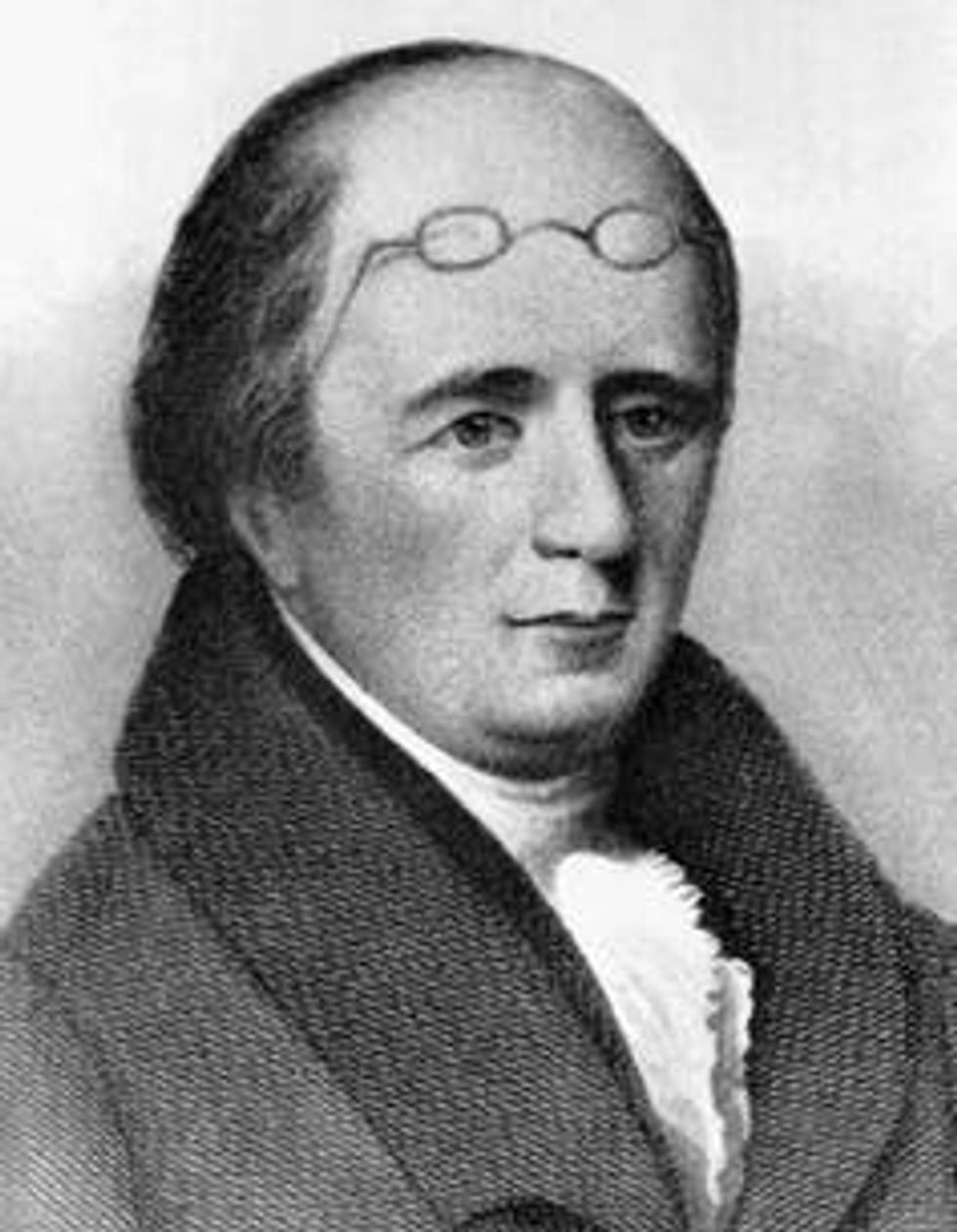
William Morgan’s disappearance fueled the rise of the Anti-Masonic Party.
In the United States, anti-Masonic fervor took hold following the disappearance and presumed killing of a Mason, William Morgan, in the 1820s. Morgan had vowed to publish a book exposing Masonic secrets. Local members urged Morgan to stop the book project; when he refused, they had him arrested for a debt of under $3. After being released on bail, he was never seen again. It was widely believed that local Masons killed him to in order to prevent him from publishing their secret rituals.
Anger at the purported killing and cover-up led to widespread criticism of secret societies and to the formation of a new political party, the Anti-Masonic Party. Running on a platform against corruption, immorality and elitism, the party won 15 state legislative seats in 1827, and its ranks swelled thanks to an organized media campaign. At one point, party backers were publishing 35 weekly newspapers and dozens of party members were elected to Congress in the 1830s.
The movement was most popular in the Northeast, especially in areas that had been heavily impacted by evangelical revivals. Evangelicals were drawn to its critique of sinful behaviors, while members of the working class liked the party’s anti-elitist rhetoric.
During the presidential election of 1832, the Anti-Masonic Party opposed President Andrew Jackson, who was a Mason, and had planned to support his opponent, Henry Clay. But after members found out that Clay was also a Mason, the party went on to back a third-party candidate, William Wirt. The anti-Masons hosted their own convention, and Wirt received 8% of the presidential vote.
After the election, the Anti-Masonic Party merged with former Republicans to form the Whig Party, which would become a force in American politics for several decades. A number of prominent Whigs, from former President Millard Fillmore to former New York Gov. William Seward, were originally members of the Anti-Masonic Party.
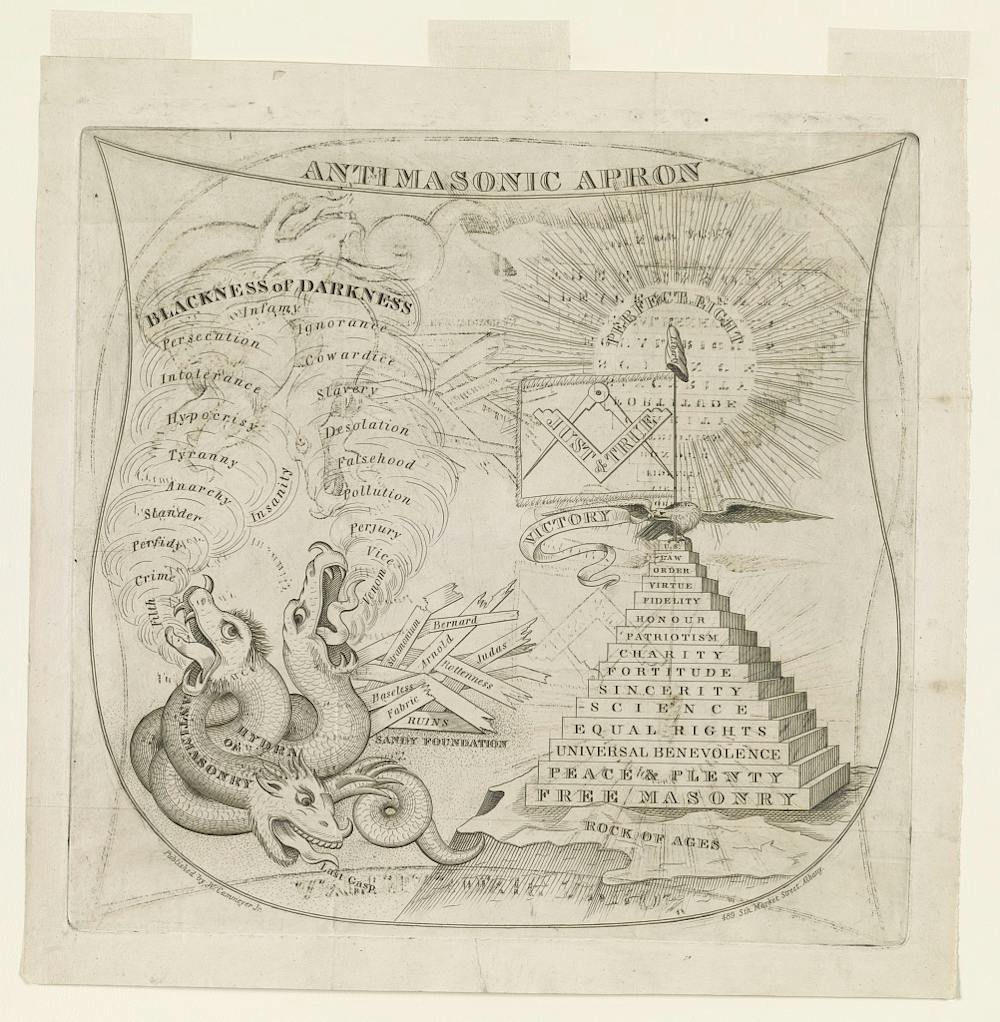
An apron contrasts the ideals of the Freemasons with the ‘darkness’ and ‘ignorance’ of the Anti-Masonic Party.
Investigative journalist Chip Berlet, who has written extensively about the spread of conspiracy theories, has pointed out that many of the conspiracies tied to American politics contain similar threads. Everyday Americans tend to be “held down by a secretive group of wealthy elites” who manipulate “corrupt politicians, mendacious journalists, propagandizing schoolteachers and nefarious bankers.”
Like the anti-Masonic conspiracies, QAnon followers believe that a secretive group of elites is secretly controlling social institutions for satanic ends. The conspiracy also portends a “Great Awakening,” during which the masses will finally grasp the existence of the depraved cabal and bring it to justice.
The Anti-Masonic Party understood the importance of leveraging the media in order to reach a wider audience. Likewise, QAnon adherents have used social media platforms as digital megaphones. Facebook and Twitter recently banned QAnon groups and content, but only after their platforms helped the movement grow exponentially. A recent study conducted by Facebook found that QAnon-affiliated groups on the platform had millions of members.
There’s an important difference between the two conspiracies, however. The Freemasons are actually a secret society. Their influence may have been overstated, but they nonetheless represented an actual group of people, many of whom have held positions of power.
The cabal described by QAnon loops in individuals who have long been targeted by conspiracy theorists, from George Soros to Jeffrey Epstein. Anyone, really, can be accused of being part of the satanic ring, and it becomes that much more difficult to argue with the conspiracies to either prove an individual’s innocence or disprove the conspiracy.
Media attention backfires
Political scientist Michael Barkun describes conspiracy theories as “stigmatized knowledge,” in which attempts to invalidate the claims only reinforce the beliefs among followers, who see these efforts as proof that those in power want the theories muzzled. This is the same impetus that no doubt helped transform the unsolved mystery of William Morgan’s disappearance into a nationwide political movement.
QAnon discussions frequently blame the mainstream media for intentionally discrediting them in order to prop up the cabal. Under a YouTube video explaining Q, one commenter wrote, “‘Conspiracy Theory’ is CIA-speak for ‘Uh-oh! They KNOW!’” A poster on “Q Research Forum” wondered “where is the journalist who will do a ‘what the [mainstream media] won’t tell you about Q’ story?”
Before winning her congressional runoff, Marjorie Taylor Greene publicly voiced support of QAnon in Facebook videos.
A 2019 Emerson poll found that 5% of Americans believe in QAnon. This might seem like a small number. But elections can serve as important platforms to expand movements. At their most basic level, they expose more voters to individuals who hold certain beliefs and ideas.
Even a small group of motivated conpiracists can have an outsize effect on broader society, as in the anti-Masonic Party, and increasing representation in elected officials can end up legitimizing fringe beliefs. This is particularly true if those politicians, like Greene, are maligned by both the media and the political establishment.
CNN fact checker Daniel Dale on Wednesday called B.S. on President Donald Trump's latest tweet attacking mail-in voting.
Earlier in the day, the president suggested that the 2020 vote would be "rigged" because early returns on election night might show him winning, only for that lead to disappear as more mail-in ballots are counted.
The president's tweet refers to a new report from Democratic-aligned data firm Hawkfish that warns about Trump falsely claiming a big victory on election night after the early returns show him leading, as his voters are more likely to vote in person than by mail.
However, the firm said any such lead will prove illusive, as mail-in ballots will swing the election significantly back to Democratic nominee Joe Biden once they are counted.
"This tweet is nonsense," Dale wrote in response. "The report simply noted Trump might *appear* to have a big win on election night, when many votes won’t have been counted yet, but that, after all the (entirely legitimate!) mail votes are indeed counted, the lead might vanish."
The bottom line, argues Dale, is that there's "nothing rigged about it."
On Wednesday, The Daily Beast reported that Fox News' "hard news" anchors are avoiding booking Dr. Scott Atlas, President Donald Trump's new preferred coronavirus adviser.
"According to three people familiar with the situation, Fox News producers have been instructed in recent weeks to take extra care when inviting Atlas onto the network to discuss the pandemic, which is rapidly approaching a U.S. body count of 200,000," said Asawin Suebsaeng and Maxwell Tani. "Some Fox staffers involved in the network’s more straightlaced daytime news programs have been increasingly reluctant to book him altogether."
"A Daily Beast analysis of all of his Fox News hits shows that as the summer progressed and as his stock quickly rose in Trump’s inner sanctum, Atlas’ appearances on Fox’s news programming took a dramatic plunge," said the report. And although Atlas has still gone on Fox's hard-right opinion programming like Tucker Carlson's and Laura Ingraham's shows, "Among the 'hard-news' division shows at Fox, Atlas is viewed with skepticism by senior staff at many of the programs, as they view him as lacking credibility during the coronavirus crisis, and as someone who isn’t even a medical expert in the relevant field."
One Fox News official said, “Atlas has a background in radiology, not infectious diseases. It makes no sense to have him on to discuss a contagious respiratory virus that continues to spread through parts of this country like wildfire.”
Atlas' increased prominence in the Trump administration's health policy has alarmed experts. A member of the right-wing Hoover Institution, Atlas reportedly considers himself the "anti-Dr. Fauci," and believes businesses should open sooner than others, with "herd immunity" — or knowingly letting people get sick — being used to manage spread of the virus.
Melania Trump and her friend conspired to keep Ivanka Trump out of camera range during the 2017 inauguration, according to a new tell-all book.
That's one of the juicy tidbits dished out by Stephanie Winston Wolkoff, who wrote about her years-long relationship with President Donald Trump's wife in "Melania and Me: The Rise and Fall of My Friendship with the First Lady," as reported by The Daily Beast.
"Planning the seating on the dais at the swearing-in, Melania and Wolkoff conspired to keep Ivanka out of camera range during the ceremony," the website reports.
Melania Trump and her daughter-in-law both agreed -- a rare occurrence, according to the book -- to hire Wolkoff to help plan the inauguration, and the president's allies blamed her for some of the spending irregularities from the event after she stayed on to help the first lady transition into her public role.
“Our first month in the White House was like living inside an emotional washing machine that only made you feel dirtier with every rinse," Wolkoff wrote.
Wolkoff learned too late that when Melania Trump insisted that she didn't care what people think, that meant her once-close friend, as well.
“I gave her the benefit of the doubt," Wolkoff wrote, "and she took it.”
There were signs all along that Melania Trump was a detached friend, to put it mildly.
"I saw Taylor today," Melania Trump wrote to Wolkoff, after spotting her friend's son. "I called his name, but I don’t think he recognized me."
Wolkoff recalled her friend's email in the book, after their relationship had chilled.
“Maybe because his name is Tyler, not Taylor," Wolkoff wrote. "She spelled and pronounced his name incorrectly for ten years, and I never corrected her and neither did Tyler. She saw it spelled the right way in my texts, emails, and party invites but stuck with her variation.”
President Donald Trump urged Sarah Huckabee Sanders to "take one for the team" after North Korean leader Kim Jong-un appeared to wink at her during a 2018 summit.
“Kim Jong-un hit on you!” Trump told his press secretary, according to the book. “He did! He f*cking hit on you!”
Sanders said the wink came as Trump and Kim talked about sports, including women's soccer, and she looked up to see the North Korean leader staring at her.
"We made direct eye contact and Kim nodded and appeared to wink at me," she wrote. "I was stunned. I quickly looked down and continued taking notes."
“All I could think was, ‘What just happened? Surely Kim Jong-un did not just mark me!?’” she added.
Later, in the presidential “Beast” limousine on the way to the airport, Sanders relayed the incident to Trump and his then chief of staff, John Kelly, and the president's reaction seemed to embarrass her.
“Sir, please stop,” she said, protesting the idea that Kim had flirted with her.
Kelly agreed with Trump, who then joked that she should visit him privately in North Korea.
“Well, Sarah, that settles it," Trump said, according to Sanders. "You’re going to North Korea and taking one for the team! Your husband and kids will miss you, but you’ll be a hero to your country!”
Sanders said the president and his chief of staff "howled with laughter" as they drove on.
Axios reports that "economists are warning that the economic downturn caused by the coronavirus pandemic is now creating another recession: mass job losses, business failures and declines in spending even in industries not directly impacted by the virus."
Although many businesses have since reopened after initially closing down during the early months of the pandemic, other businesses are finding that they aren't seeing as much demand for their services even after restrictions on economic activity have been lifted.
"As the recovery has slowed down we’ve seen a couple of metrics transform from something that was extraordinary and unique and that we’d only seen in this COVID recession to something that is much more in line with our historic experience with typical recessions," Evercore ISI economist Ernie Tedeschi tells Axios.
Darius Dale, managing director at Hedgeye Risk Management, similarly tells Axios that "our view is that the U.S. economy is transitioning from a depression to a recession and not a recovery."