A Trump supporter waving a Confederate flag around was caught on camera this weekend telling a group of Black Lives Matter protesters that she would teach her grandchildren to "hate" them.
The video starts with a woman wearing a camouflage "Make America Great Again" hat on the back of a pickup truck yelling at people who are protesting outside of Dixie Outfitters.
"I will teach my grandkids to hate you all!" she shouted at the demonstrators.
Then she stood up, brandished the flag in front of the demonstrators, and said, "Suck on this!"
After this, she wrapped the flag around her back like a cape before turning back to the protesters and giving a supportive shout out to the Ku Klux Klan.
The owner of a shaved ice stand in Kansas said this week a controversial snow-cone flavor will no longer be sold by his business.
Tropical Sno owner David Schaper told KSNF that his "burning noose" flavor had caused too much controversy.
“I’m not even going to have the flavor anymore, I guess," he lamented. "It’s caused so much controversy.”
Schaper explained that the "burning noose" flavor -- which combines grape, watermelon, and cotton candy -- was the idea of a "young African-American man."
"They would come with friends, and he wanted to make this flavor," he recalled. “He chose the flavors, and he chose the ingredients of it.”
“I certainly meant nothing by it, and I treat all my customers the same," Schaper added. "I’m 100-percent against any form of racism.”
It was not immediately clear why the flavor was named "burning noose."
US Secretary of State Mike Pompeo on Monday demanded that China free two Canadians who were charged with spying following a row involving all three nations.
"The United States stands with Canada in calling on Beijing for the immediate release of the two men and rejects the use of these unjustified detentions to coerce Canada," Pompeo said in a statement.
Pompeo said the United States was "extremely concerned" by the charges and also urged China to allow consular access, saying there has been no contact with the pair for nearly six months.
Former diplomat Michael Kovrig and businessman Michael Spavor were detained in December 2018, nine days after Huawei executive Meng Wanzhou was arrested in Canada on a US warrant.
Canadian Prime Minister Justin Trudeau, who called Friday for the two men's release after the charges were unveiled, has said that China explicitly linked their arrests to the Meng case.
Relations between Canada and China have hit rock bottom over the arrests. Beijing has blocked billions of dollars in Canadian agricultural exports.
Meng is the daughter of the founder of Huawei, the telecom giant which the United States, with limited success, is urging all nations to shun on security grounds.
She is living in a mansion in Vancouver while she is out on bail.
John Harwood once worked at CNBC covering business, economics and the markets, but at CNN Harwood is at the White House covering the ever-evolving story about the future of the coronavirus in the United States.
"Look, eventually reality catches up to political baloney, and that's what's happening in real-time with coronavirus," said Harwood at the White House.
On Monday, the White House said that they would no longer require temperatures be taken to enter the building. It's a strange move given six of Trump's advance team, including two Secret Service agents, tested positive for COVID-19 ahead of the Tulsa rally.
"We've had mixed messages and missed messages all year long on coronavirus," said Harwood. "It was really brought to a head this morning. Take a listen to these two advisers, both economic advisers, Peter Navarro and Larry Kudlow. Listen to their differing assessments of what we're facing ahead in the next couple of months."
"It’s just hot spots. They send in CDC teams, we’ve got the testing procedures, we’ve got the diagnostics, we’ve got the PPE. And so I really think it’s a pretty good situation,” he said.
“Actually, I think nationwide the positivity rate is still quite low, well under 10 percent," he also said. Ten percent of the U.S. population would mean nearly 32 million people would have the coronavirus.
Peter Navarro, by contrast, said that the U.S. is filling the stockpile anticipating a second-wave would come in the fall.
"Look, Larry Kudlow is my friend," Harwood confessed. "We worked together at CNBC for many years. It is hard to think of a public official with less credibility on this topic than Larry Kudlow. He's the one who said we've got it controlled airtight several months ago."
On Monday, former Office of Government Ethics Director Walter Shaub tore into Senate Republicans for standing behind President Donald Trump in spite of all his attacks on the rule of law.
In particular, Shaub tweeted, Senate Republicans' refusal to exert any oversight in the wake of Trump firing the U.S. attorney for the Southern District of New York is a throwback to when every Senate Republican except Mitt Romney voted to fully acquit the president of abuse of power and obstruction of Congress in the Ukraine impeachment saga.
Shaub managed the White House ethics office in the first few months of the Trump administration, and resigned to work for the Campaign Legal Center after a series of clashes with administration and congressional officials.
An anchor for Fox 5 in New York asked a Korean band to explain why their fans allegedly sabotaged a President Donald Trump's recent rally in Tulsa.
The exchange occurred as the band TXT was being interviewed on Monday morning.
"A million people were going to show up but a lot of K-pop fans have said they actually got the tickets," the anchor explained. "Do you know anything about that whole movement, TikTok users and K-pop fans getting those tickets for President Trump's rally and then not showing up?"
The band members seemed confused by the question.
"We were practicing, that's all," one performer explained.
Politico reports that Trump aides knew that many of the people who signed up to attend the rally were trolls who had no intention of ever showing up.
Nonetheless, they believed that the rally would still attract a substantially larger crowd than it did.
"After sorting through the sign-ups — a process that included looking at registrants' voting histories — they determined that about 300,000 were fake," Politico reports. "To winnow down the likely audience further, advisers estimated that only between 200,000 and 300,000 people lived within immediate driving distance. Worst-case scenario, they concluded, was an audience of about 60,000."
As it turns out, just over 6,000 Trump supporters showed up for the rally -- or around 10 percent as large as the total the campaign thought was its "worst-case scenario."
"Hours before the rally was to get underway, it became clear to the president’s lieutenants that a debacle was underway and that there would be a patchwork of empty seats," Politico's sources say.
Writing in The Bulwark, columnist Tim Miller unpacks President Trump rally this Saturday on Tulsa, Oklahoma -- the first rally he's held since the onset of the coronavirus pandemic. The rally was supposed to be a blowout, but to Trump's surprise, he faced a half-empty arena and a host of other issues that have raised questions about the strength of his campaign as November closes in.
According to Miller, as soon as Trump stepped on the stage Saturday, "the story transformed from dystopian fiction to absurdist farce."
"The Trump on display in Tulsa was not a strong man steeling himself for a crackdown against protesters while standing astride a silent majority of mask-eschewing followers with a death wish," Miller writes. "Instead, out from behind the curtain came a weak and whiny D-list Rodney Dangerfield, obsessed with minor slights and not getting enough respect from the Fake News Media that he claims to hate but seems to be kind of super into."
Miller contends that there was something different about the energy of Trump's speech this time around, like a guy "hitting his spots even after losing confidence in his routine, because he doesn’t know any other material."
"The man who once obsessed over his great poll numbers is down everywhere, by nearly double digits," writes Miller. "The man who bragged every day about the economy is staring at 13 percent unemployment. The man who gloried in the throngs of packed auditoriums and expected a crowd so big that he would have to give a second performance at an outdoor venue stood in the middle of an arena surrounded by empty blue seats, having been thwarted by TikTok teens."
When it comes to a global pandemic and growing racial strife, Trump doesn't have the answers, and that much was clear on Saturday. "He went to Tulsa because he had gone almost four months without the mass adulation to which he had grown accustomed. And it made him grumpy."
The massive protests that erupted across the United States – and beyond – after the police killing of George Floyd are billed as anti-racist mobilizations, and that they are. Demonstrators are denouncing police violence in minority communities and demanding that officers who abuse their power be held accountable.
But I see something more in this wave of American protests, too. As a sociologist specializing in Latin America’s human rights movements and policing, I see a pro-democracy movement of the sort much common south of the border.
The Latin Americanization of United States
Normally, U.S. protests have little in common with Latin America’s.
Demonstrations in the U.S. are usually characterized by pragmatic, specific goals like protecting abortion access or defending gun rights. They reflect, for the most part, an enduring faith in the constitution and democratic progress. American protests are rarely nationwide, and even more rarely persist for weeks.
Latin America protests, on the other hand, are often sustained movements with ambitious goals. They seek regime change or an entirely new constitutional order.
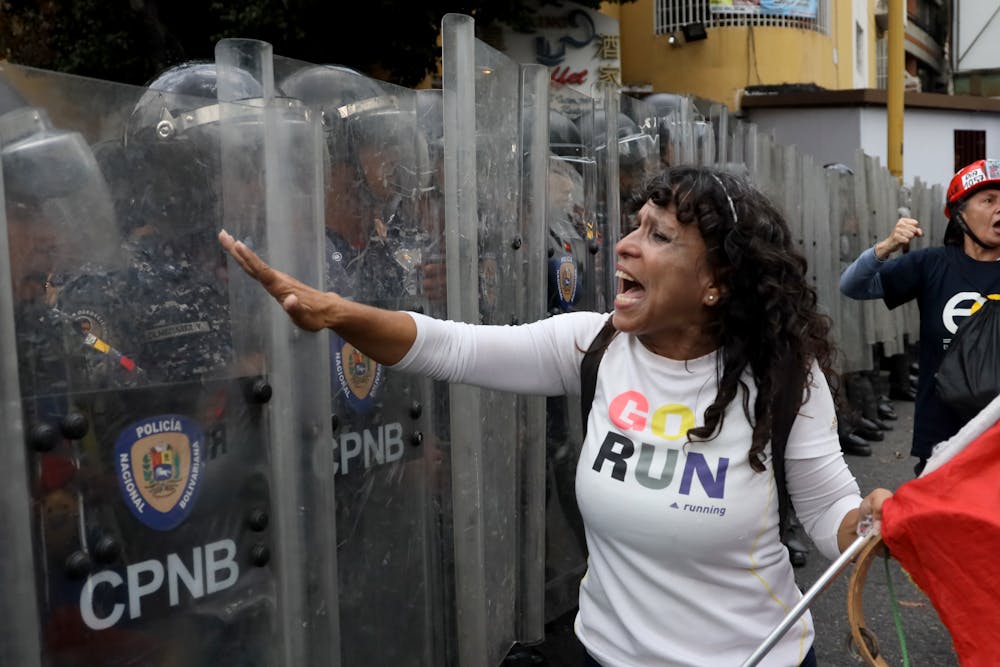
Take Venezuela, for example. There, millions have been protesting the autocratic President Nicolás Maduro for years, despite brutal suppression by police and the military – though the opposition has not yet succeeded in ousting him. Even Chile, a relatively stable democracy, in 2019 faced massive anti-inequality demonstrations demanding, among other things, that the country rewrite its dictatorship-era constitution.
An anti-government demonstrator shouts at police officers during a protest on March 10, 2020 in Caracas.
Today’s U.S. demonstrations call to mind this kind of Latin American anti-authoritarian movement.
Americans’ famed faith in democracy has been eroding under Trump, a leader who, as a recent article in the Journal of Democracy noted, is “increasingly willing to break down institutional safeguards and disregard the rights of critics and minorities.” There is growing concern that voter suppression, especially targeting minority voters, will undermine the 2020 election.
An ongoing study by sociologist Dana Fisher from the University of Maryland found that of hundreds of protesters in multiple cities, “people participating in the recent protests are extremely dissatisfied with the state of democracy.” Just 4% of respondents said they were “satisfied with democracy,” the author reported.
And these demonstrations are spreading across the country, say protest researchers Lara Putnam, Jeremy Pressman and Erica Chenoweth – including into small, largely white towns with deeply conservative politics. In terms of nationwide participation, they have eclipsed the women’s marches of January 2017.
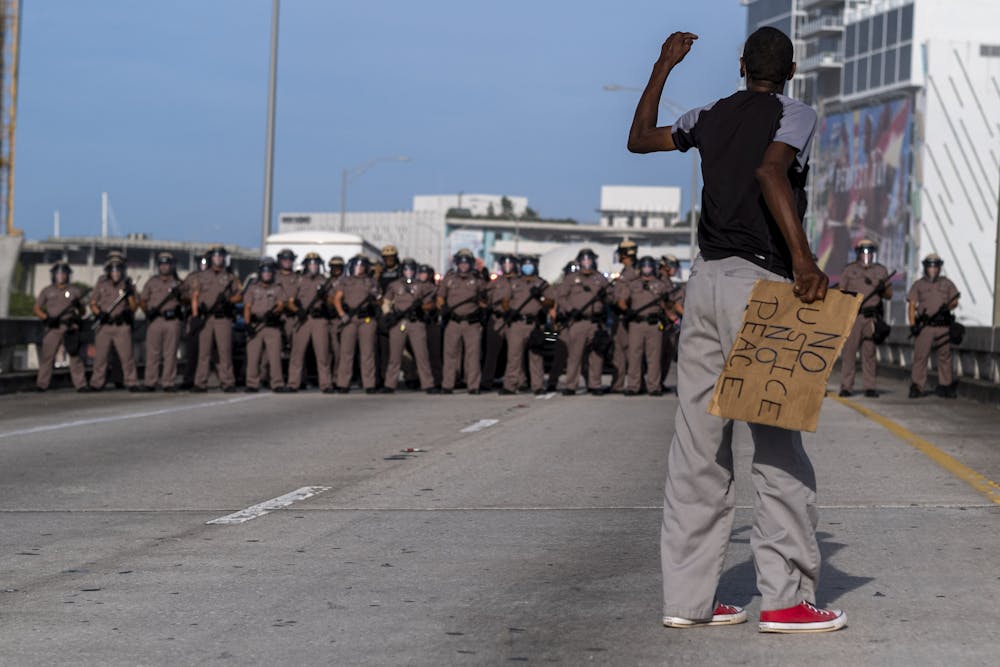
Florida state troopers at a rally in response to the recent death of George Floyd in Miami, Florida on May 31, 2020.
Washington has historically had few qualms, however, about using its military to influence Latin American politics and society. From the 1960s through the 1980s, authoritarian military governments ruled Argentina, Brazil, Chile, Uruguay and beyond, with overt and covert U.S. support.
From Nicaragua to Venezuela and Bolivia, many elected governments in the region have devolved into essentially authoritarian regimes. Their populist leaders use quasi-constitutional methods like plebiscites, voter suppression and constitutional amendments to strengthen their power.
These undemocratic tendencies explain Latin America’s regular, sustained waves of massive anti-authoritarian protests.
In a similar way, Trump’s undemocratic tendencies explain some of the energy driving these young, multiracial crowds on American streets today. According to University of Maryland researcher Dana Fischer, 45% of white protesters surveyed said Trump motivated them to march, compared to 32% of black people.
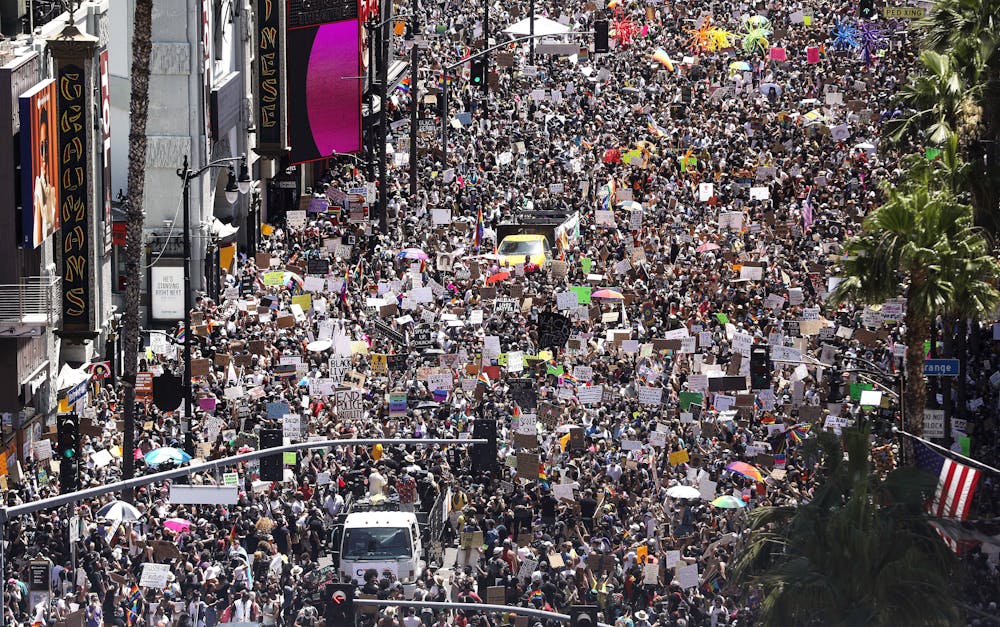
An anti-racist protest in Los Angeles on June 14, 2020. Rarely has the US seen massive, sustained, nationwide protests.
Police brutality is another underlying shared feature between American and Latin American protest movements.
As Black Americans have long recognized, police brutality is an instrument of authoritarian repression. In some Latin American countries, police routinely execute those they determine to be gang members, drug traffickers or common criminals and face no consequences. We call it police vigilantism.
Brazil is home to one of the world’s most lethal police forces. Last year, police in the state of Rio de Janeiro killed a record 1,810 people. The victims are predominantly young black and brown men from poor neighborhoods.
In comparison, local police in the United States – which has about 100 million more people than Brazil – killed 1,004 people nationwide in 2019, according to a Washington Post analysis. Half of them were people of color aged 18 to 44. Most were male.
New Yorkers filled the streets in support of Black Trans Lives Matter and George Floyd on June 14, 2020.
The raw numbers may be lower, but I’m struck by the similarity of the victims and the rationale behind the killings – as well as the impunity that usually follows police shootings.
I believe it is the overlap of continued police violence with the broader authoritarian creep in the U.S. that explains this unusual mass protest movement. Millions of Americans are taking to the streets for the same reasons as their Latin American counterparts – to fight for their lives, and for their democracy.
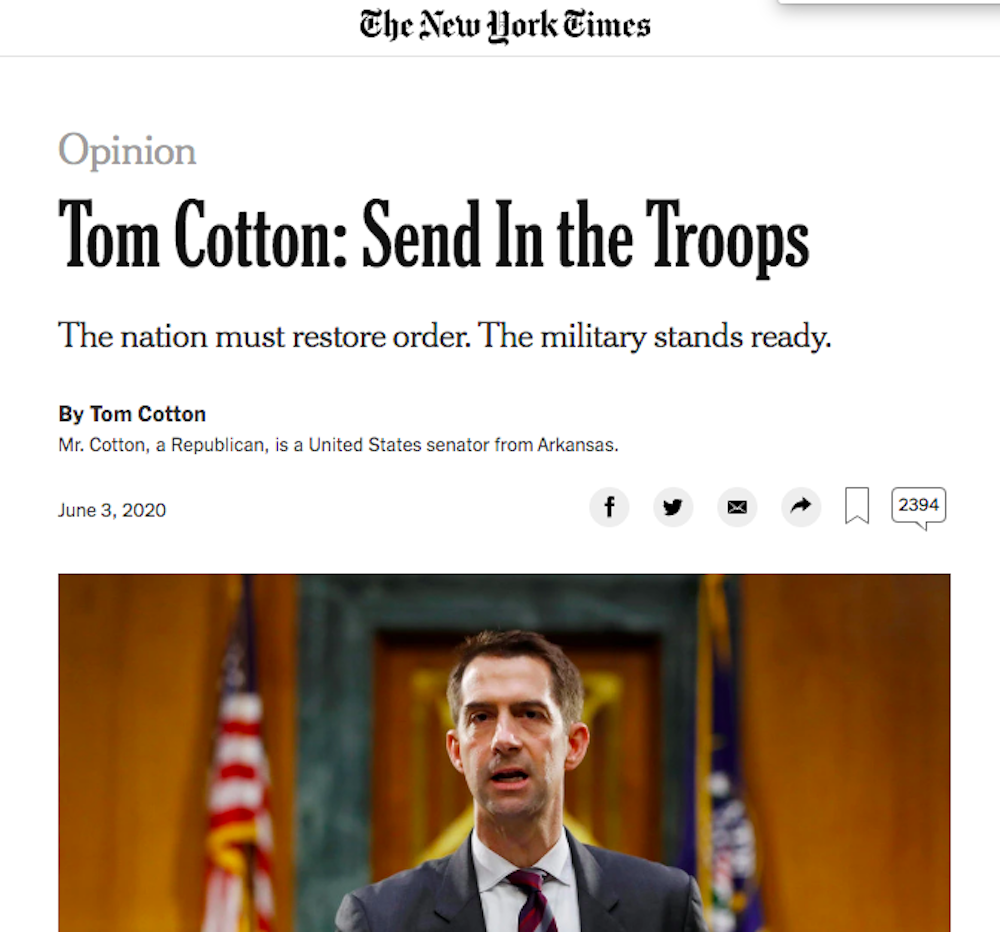
The New York Times opinion editor James Bennet resigned recently after the paper published a controversial opinion essay by U.S. Senator Tom Cotton that advocated using the military to put down protests.
The essay sparked outrage among the public as well as among younger reporters at the paper. Many of those staffers participated in a social media campaign aimed at the paper’s leadership, asking for factual corrections and an editor’s note explaining what was wrong with the essay.
Cotton’s column was published on the opinion pages – not the news pages. But that’s a distinction often lost on the public, whose criticisms during the recent incident were often directed at the paper as a whole, including its news coverage. All of which raises a longstanding question: What’s the difference between the news and opinion side of a news organization?
It is a tenet of American journalism that reporters working for the news sections of newspapers remain entirely independent of the opinion sections. But the divide between news and opinion is not as clear to many readers as journalists believe that it is.
And because American news consumers have become accustomed to the ideal of objectivity in news, the idea that opinions bleed into the news report potentially leads readers to suspect that reporters have a political agenda, which damages their credibility, and that of their news organizations.
Long before newspapers became institutions for collecting and distributing news, they were instruments for the personal expression of individuals – their owners. There was little thought given to whether or not opinion and fact were intermingled.
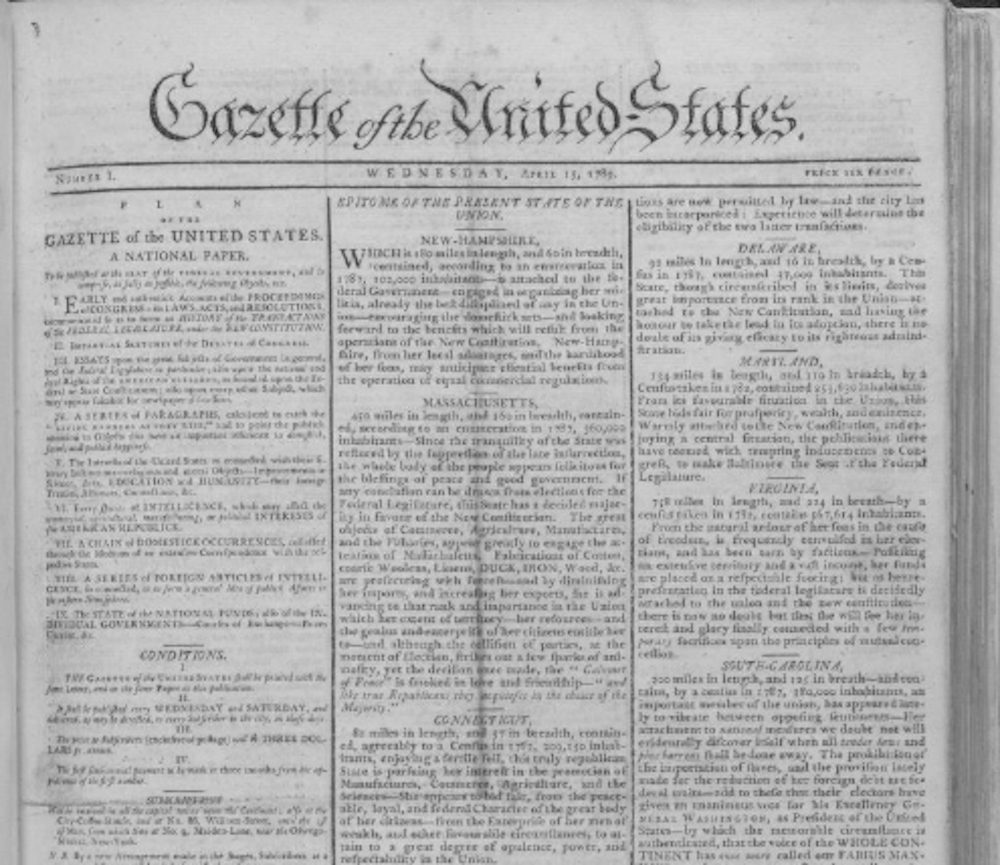
Benjamin Franklin ran the Pennsylvania Gazette from 1729 to 1748 as a vehicle for his own political and scientific ideas and even just his day-to-day observations. The Gazette of the United States, first published in 1789, was the most prominent Federalist paper of its time and was funded in part by Alexander Hamilton, whose letters and essays it published anonymously.
Front page of the inaugural issue of the Gazette of the United States, from April 15, 1789.
Over the course of the 19th century, though, newspapers began to seek a popular audience. As they grew in circulation, some began to emphasize their independence from faction.
Coupled with the rise of journalism schools and press organizations, this independence enshrined “fact” and “truth” as what scholar Barbie Zelizer calls “God-terms” of journalism by the early 20th century.
Newspaper owners never wanted to give up their influence on public opinion, however. As news became the main product of the newspaper, publishers established editorial pages, where they could continue to endorse their favorite politicians or push for pet causes.
These pages are typically run by editorial boards, which are staffs of writers, often with individual areas of expertise (economics or foreign policy or, in smaller papers, state politics), who draft editorial essays. They are then voted on by the board, which usually includes the publisher. They’re then published, usually with no author attribution, as the official opinions of the newspaper. There are variations on this process: Often the editorial board will decide on topics and the paper’s opinion before these writers get to work on their drafts.
James Bennet, The New York Times opinion editor who resigned, acknowledged in an article on the paper’s website that was published in January 2020, months before the Cotton essay, that “the role of the editorial board can be confusing, particularly to readers who don’t know The Times well.”
Through most the 20th century, newspapers reassured their readers and their reporters that there was a “wall” between the news and opinion sides of their operations.
Unbiased journalism is a relatively new phenomenon.
Publishers relied on this idea of separation to insist that their news reporting was fair and independent, and they believed that readers understood that separation.
This is a particularly American way of operating. Readers in other countries usually expect their newspapers to have a point of view, representing a particular party or ideology.
The creation of the op-ed page
One way that newspapers found to allow a greater range of opinion in its pages was to create an op-ed page, which publishes opinions by individuals, not those of the editorial board. As journalism historian Michael Socolow recounts, John Oakes, the editorial page editor of The New York Times in 1970, created the first op-ed page because, he felt, “a newspaper most effectively fulfills its social and civic responsibilities by challenging authority, acting independently, and inviting dissent.”
“Op-ed” is short for “opposite the editorial page,” not “opinion and editorial” or opinions that are opposite from those of the editorial page. Literally, the name comes from the fact that it was located across from – opposite – the editorial page in the print newspaper.
The op-ed page of a print newspaper typically includes the newspaper’s opinion columnists. These are employees of the paper who write regularly. The paper also usually publishes a selection of opinion pieces from outside writers. Newspapers around the country emulated the Times after the op-ed page debuted.
While the move online allows the Times op-ed page to vastly increase its output, it also creates a problem: Opinion stories no longer look clearly different from news stories.
With many readers coming to news sites from social media links, they may not pay attention to the subtle clues that mark a story published by the opinion staff.
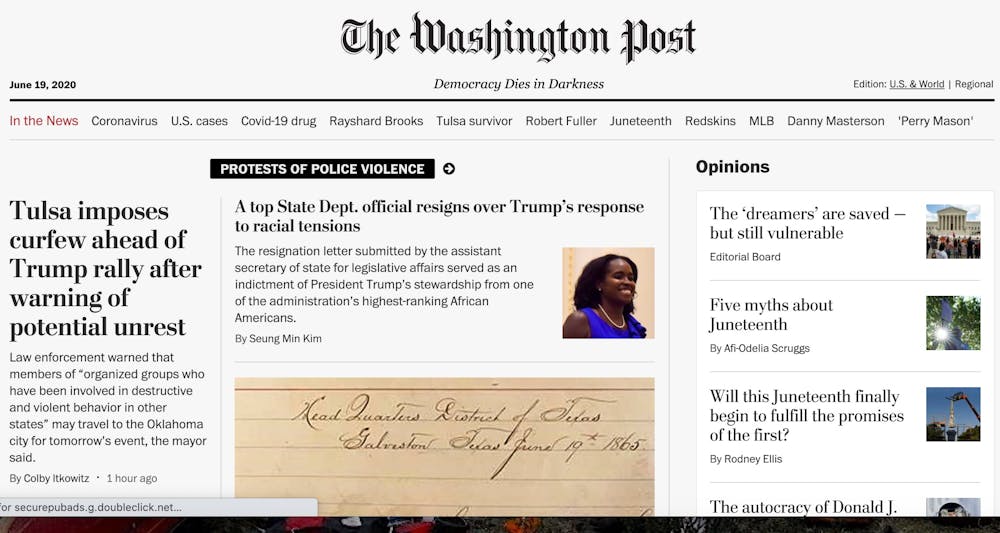
The Washington Post homepage on June 19, 2020. Opinions at top right; reporting to the left.
Add to this the fact that even readers who go to a paper’s homepage are met with news and opinion stories displayed graphically at the same level, connoting the same level of importance. And reporters share analysis and opinion on Twitter, further confusing readers.
The news sections of the paper also increasingly run stories that contain a level of news analysis that casual readers might not be able to distinguish from what the Times designates as opinion.
Even if readers in 1970 could clearly differentiate between news and opinion, they likely do not have the same level of critical engagement when news exists online and in almost unmanageable volume.
If news organizations such as The New York Times continue to maintain that a robust opinion section, separate from their news reports, serves to further the public conversation, then those institutions will need to do a better job of explaining to news consumers where – or if – the “wall” between news and opinion exists.
You probably know what it means to “come out” as gay. You may even have heard the expression used in relation to other kinds of identity, such as being undocumented.
But do you know where the term comes from? Or that its meaning has changed over time?
In my new book, “Come Out, Come Out, Whoever You Are,” I explore the history of this term, from the earliest days of the gay rights movement, to today, when it has been adopted by other movements.
Selective sharing
In the late 19th and early 20th century, gay subculture thrived in many large American cities.
Gay men spoke of “coming out” into gay society – borrowing the term from debutante society, where elite young women came out into high society. A 1931 news article in the Baltimore Afro-American referred to “the coming out of new debutantes into homosexual society.” It was titled “1931 Debutantes Bow at Local ‘Pansy’ Ball.”
The 1930s, ‘40s and ‘50s witnessed a growing backlash against this visible gay world. In response, gay life became more secretive.
The Mattachine Society, the earliest important organization of what was known as the homophile movement – a precursor of the gay rights movement – took its name from mysterious medieval figures in masks. In this context, coming out meant acknowledging one’s sexual orientation to oneself and to other gay people. It did not mean revealing it to the world at large.
Such selective sharing relied on code phrases – such as “family,” “a club member,” “a friend of Dorothy’s,” “a friend of Mrs. King” or “gay” – that could be used in mixed company to designate someone as homosexual.
The term “gay” was originally borrowed from the slang of women prostitutes, when they used the word to refer to women in their profession. Of course, “gay” was ultimately “outed” when the gay rights movement adopted it following the Stonewall Rebellion in 1969.
Out in public
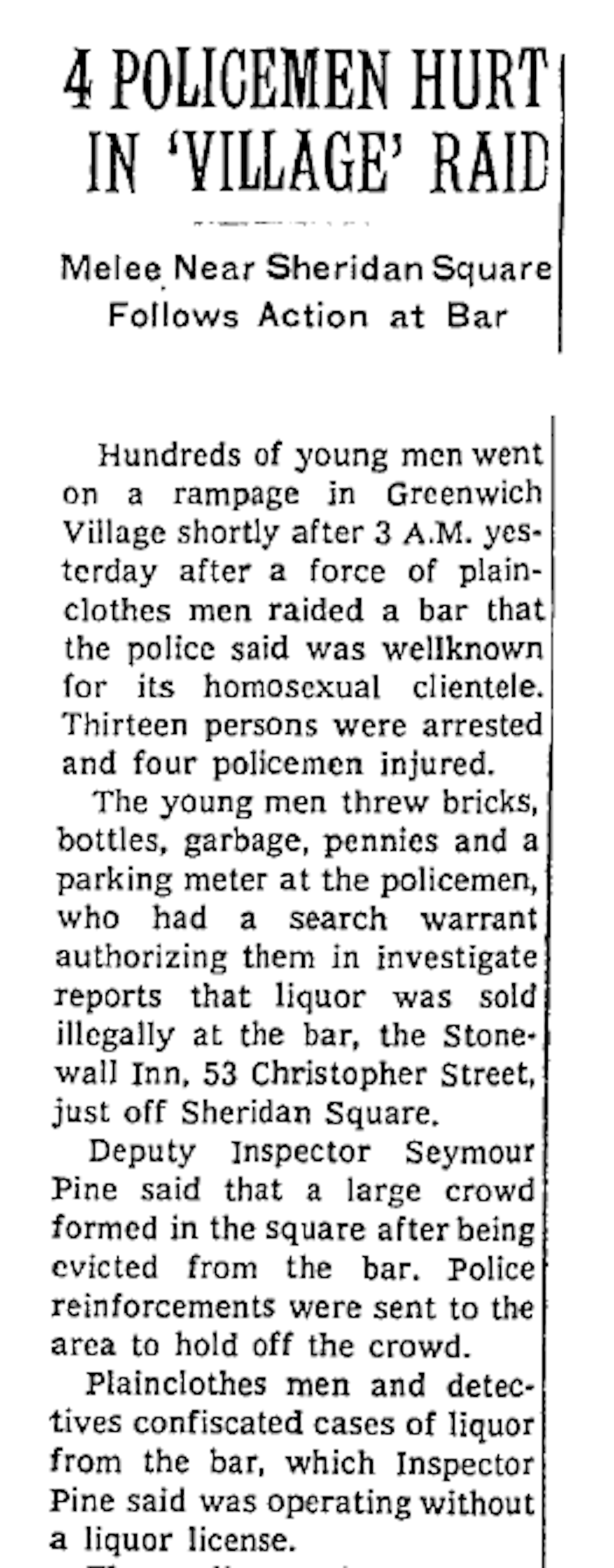
The first article on Stonewall to appear in The New York Times.
Coming out took on a more political meaning after the 1969 Stonewall Rebellion, in which patrons of the Stonewall Inn in New York City fought back against a police raid. The rebellion included riots and a resistance that lasted for days. It was subsequently commemorated in an annual march known today as “gay pride.”
At the first Gay Liberation March in New York City in June 1970, one of the organizers stated that “we’ll never have the freedom and civil rights we deserve as human beings unless we stop hiding in closets and in the shelter of anonymity.”
By this time, coming out was juxtaposed with being in the closet, conveying the shame associated with hiding. By the end of the 1960s, queer people who pretended to be heterosexual were said to be “in the closet” or labeled a “closet case” or, in the case of gay men, “closet queens.”
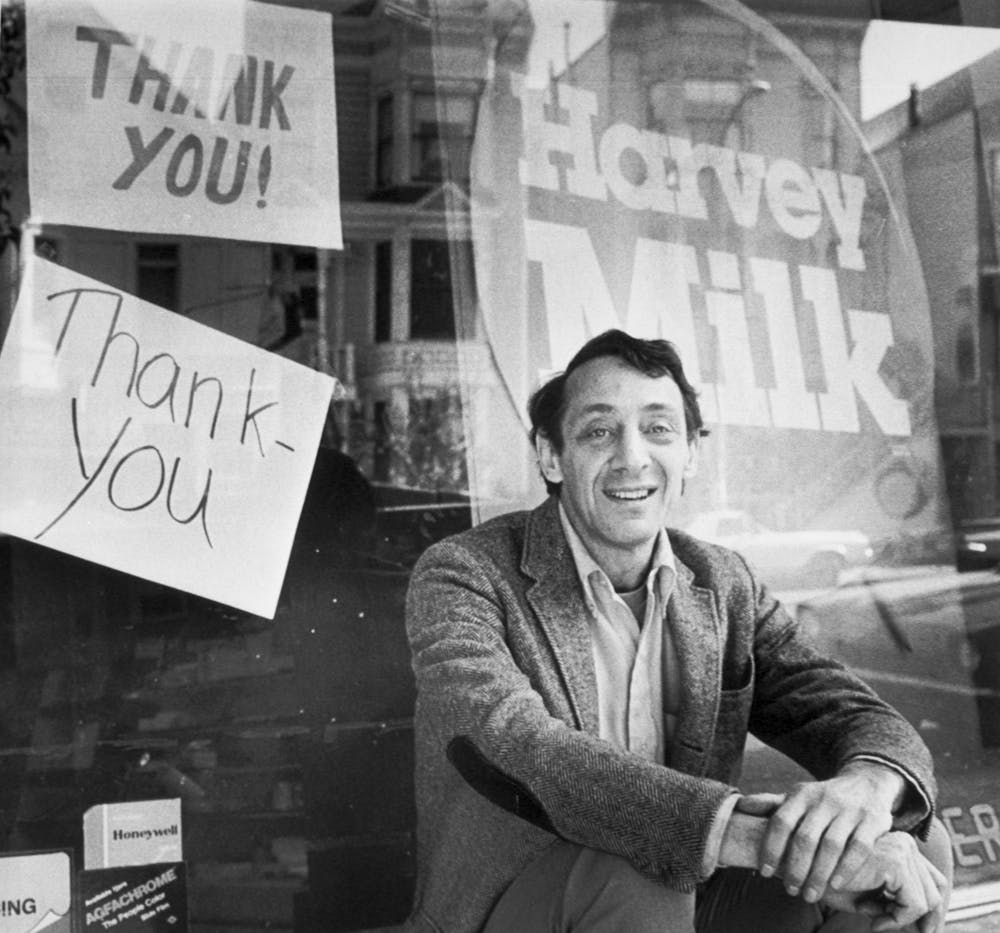
For instance, in 1978, in his campaign to defeat a California initiative that would have banned gay teachers from working in state public schools, openly gay elected government official Harvey Milk urged people to “Come Out, Come Out, Wherever You Are.”
Supervisor Harvey Milk sits outside his camera shop in November 1977.
Milk gambled that if queer people told their friends they were gay, Californians would realize that they had friends, coworkers and family members who were gay and – out of solidarity – would oppose the proposition. The campaign helped defeat the initiative.
In the 1980s, the gay and lesbian rights movement radicalized in response to the Christian right and AIDS epidemic. Activists used the mantra “Come Out, Come Out, Wherever You Are” to demand that people declare their homosexuality. The coming out narrative became a rite of passage, something to be shared with others, and the centerpiece of gay liberation movements.
In your face
In the 1990s, the radical organization Queer Nation took coming out to a new level.
Its members wore T-shirts in Day-Glo colors with slogans such as “PROMOTE HOMOSEXUALITY. GENERIC QUEER. FAGGOT. MILITANT DYKE.” Wearing these T-shirts, they entered heterosexual bars in New York and San Francisco and staged “kiss-ins.” They visited suburban shopping malls outside these same cities and chanted, “We’re here, we’re queer, we’re fabulous – and we’re not going shopping!” Through these tactics, they not only came out, but forced heterosexuals to acknowledge their presence.
The politics of coming out has helped make LGBTQ people more visible and better protected by law. As testimony of this shift, today, marriage equality is the law of the land, the popular TV comedy “Modern Family” features a gay couple and one of the leading candidates for the Democratic presidential ticket, Pete Buttigieg, is a gay man.
To be sure, homophobia and transphobia are still alive and well. Still, LGBTQ people have made clear strides in the past half-century and coming out politics has been part of their success.
Going bigger
The success of the LGBTQ movement has inspired other social movements – such as the fat acceptance movement and the undocumented youth movement, among others – to also “come out.”
As I show in my new book, coming out has become what sociologists call a “master frame,” a way of understanding the world that is elastic and inclusive enough for a wide range of social movements to use.
For example, just as Harvey Milk urged queer people to come out for “youngsters who are becoming scared,” so too the undocumented immigrant youth movement has urged undocumented youth to “come out as undocumented and unafraid.”
As one of the immigrant youth movement leaders quoted in my new book explained, Milk’s speech had impressed upon her and her peers that, “If you don’t come out nobody’s gonna know that you’re there. … They’re gonna say or do whatever they want because nobody’s standing up, and you’re not standing up for yourself.”
The specific language of “coming out, which is so closely associated with LGBTQ rights, allows other social movements to liken their experience to that of LGBTQ people.
For instance, when fat liberation activist Marilyn Wann speaks about how she "came out” as fat, she is not just speaking about a turning point in her personal biography. By using the term “coming out,” she implies that being fat is like being gay – and that, just as homophobia is morally wrong, so too is “fatphobia.” In this context, coming out as fat means owning one’s fatness and refusing to apologize for it.
As my book shows, the multiple meanings of coming out – including coming into community, cultivating self-love, and collectively organizing to promote equality and justice – offer a productive way for social movements to move forward.
White House Press Secretary Kayleigh McEnany on Monday insisted that President Donald Trump was "energized" by the low turnout at his rally in Tulsa on Saturday.
"There was some suggestions that up to a million people did register for it and then in the end I think the official count from the fire department was something like 6,500," Fox News host Steve Doocy told McEnany. "Then there were reports that teenagers on TikTok or fans of K-pop, which is Korean pop music, may have sabotaged the rally."
"My question to you, Kayleigh, is how angry was the president that there was just a sea of blue empty chairs?" the Fox News host asked.
"The president was not angry at all," McEnany replied. "The president was quite energized. I was with him after the rally. It was a huge success. His speech got rave reviews. He was in good spirits on Marine One."
"He was in a great mood, it was a great night and there was a lot to celebrate," she added.
"Kayleigh, you're saying he was not furious?" Doocy countered. "Because we've known Donald Trump. He was on this show every Monday for years. That guy who used to be on our show would have been furious that something went haywire."
McEnany once again claimed that the president "was in very good spirits" after the rally.
"He's in his best mood when he gets to speak directly to the American people because that's what he loves," she opined.
President Donald Trump's advisers are divided over his plan to hold campaign rallies in states he's already likely to win.
Washington Post reporter Robert Costa told MSNBC's "Morning Joe" that campaign advisers are questioning the strategy as Trump returns to the rallies he loves, in spite of the ongoing coronavirus pandemic, after Saturday's sparsely attended Tulsa rally.
"There's a point of tension within the Trump political circle about what is next," Costa said. "As I said, they're talking about do you continue to go to arenas because of the health concerns and the challenges you have in filling an arena. The other debate around President Trump is this, where do actually go? Because in going to Tulsa, Oklahoma, you're going to a red state, the president is eyeing a trip to Alabama, a trip to Phoenix."
"Phoenix, of course, is a real swing state, important senate race in that state for both parties," he added. "But why go to Tulsa, some Trump advisers are asking, why go back to Alabama. Yes, you could get a bigger crowd in a traditionally red state, what's the political advantage. You look at Vice President [Mike] Pence's own travel. He's rarely going to red states, he's going to battleground states like Iowa, Michigan and Wisconsin."