US actor Tom Hanks said Tuesday that Hollywood has "no idea" when it can return to production, as he described his own recovery after contracting the coronavirus, which has shut down the movie industry.
The "Forrest Gump" and "Philadelphia" Oscar-winner in March became the first high-profile star to come down with COVID-19, shortly before he was due to begin shooting an Elvis Presley biopic in Australia.
"As the canaries in the coal mine for the COVID-19 experience, we are fine -- we had about 10 days of very uncomfortable symptoms, not life-threatening, I'm happy to say," he told a virtual press conference.
Hanks said that he and his wife Rita Wilson were fortunate to be "model recoverers from COVID-19," but noted that "any number of things" could have gone wrong.
With the virus rampaging across the US -- which has recorded more than 126,000 deaths and 2.6 million cases -- many states have been criticized for reopening too early.
California gave the all-clear for filming to resume earlier this month, but most major Hollywood productions remain frozen -- a situation Hanks does not expect to change soon.
"I have no idea when I will go back to work," he said. "Nobody has any idea of when they will go back to work.
"But the time will come. We just don't know when."
He added: "Everything comes into play -- there's financial concerns, there's legal concerns, liabilities."
"There's physical concerns about 'how does everybody get to work and go into the same soundstage, and work in such close quarters?'"
Now living in isolation under social distancing rules, Hanks has watched as blockbuster titles postponed their launches, scrambling for dates later this year and into 2021, when studios hope audiences can return.
On Monday, as Los Angeles County experienced a new daily record number of cases, Mayor Eric Garcetti announced a "hard pause" in the opening of businesses including movie theaters. Cinemas are also yet to reopen in New York and a number of other US cities.
Hanks' own World War II naval thriller "Greyhound" will skip the big screen entirely, after Sony agreed to sell the movie as an Apple TV+ exclusive.
Hanks, who wrote the screenplay and stars in the movie, admitted he is "heartbroken" the film will not appear in theaters.
But he described the deal to stream it online worldwide from July 10 as a "savior" that "offers us the opportunity to have the movie out."
Movie productions have recently resumed in some countries including Iceland, South Korea and New Zealand, but Hanks said he has no timeline for returning to Baz Luhrmann's "Elvis."
"The answer is nobody knows. And me included," said Hanks.
He added: "There is nothing but questions as far as starting up physical production again. That's the terrible news."
A video is circulating showing a Saturday night brawl that broke out at an Arkansas bar that witnesses say was sparked over a dispute about social distancing, KARK reports.
A police report filed after the incident says the woman seen wearing a mask in the video warned two other patrons about sitting too close to her. An employee of the bar says the woman was apparently purposely coughing on other customers. A man who can be seen in the video wearing a 'USA' T-shirt apparently antagonized the woman by moving even closer to her, which escalated the situation.
As the argument became more heated, the woman's boyfriend hit the man in the head with a bottle.
No one involved in the incident has filed charges.
Writing in The Nation this Tuesday, Sasha Abramsky says that the self-proclaimed "law and order" president is still sending racist dog whistles to his supporters -- specifically his tweeting out a video of one of his supporters saying "white power" -- even as the coronavirus pandemic surges with a vengeance throughout America's cities. According to Abramsky, if Republicans are unwilling to call out what's in President Trump's Twitter feed, they should at least question his "mental acuity."
"Personally, I’d say both might be true: Trump is using racially explosive rhetoric to lock in his base, and his acuity is fading fast," Abramsky writes.
"Take his seeming inability to understand the importance of wearing masks to prevent the spread of the novel coronavirus," Abramsky continues. "Trumpland stands on the verge of a public health catastrophe, with much of the country seeing such rapid increases in Covid-19 infections that hospitals are already filled to near capacity and activating their emergency surge plans."
As coronavirus cases spiked this weekend, Trump chose to ignore the news and instead took to Twitter for another one of his rants, one of which included the "white power" video, but he also took aim at the Affordable Care Act, urging the Supreme Court to strike it down in its entirety.
"That tells you everything you need to know," Abramsky writes. "This bottom-of-the-barrel regime—this gang of racists and conspiracy freaks, grifters, and con artists—has nothing constructive to offer in terms of public policy."
Former Vice President Joe Biden spoke again Tuesday, addressing the problem with personal protective equipment and the unwillingness of the president to wear a mask.
Biden joined the chorus of people saying that every person must wear a mask if we intend to prevail against the coronavirus. It's a sentiment that Senate Majority Leader Mitch McConnell (R-KY) and even Vice President Mike Pence have advocated in the last several days.
"The crisis is real," Biden said. "And it's surging."
"We need to do more, including hiring at least 100,000 federally funded workers to perform contact tracing and other public health tasks," Biden said as part of his plan. "And they should begin to be trained now. Second, every single frontline worker should have the personal protective equipment that they need to be safe. Five months into this crisis and our health care workers still are forced to scramble for their own supplies. And have to reuse these masks shift after shift. Hundreds of health care workers have died from COVID-19 and tens of thousands have become infected. It should be zero on both counts for these health care workers if they had the right equipment."
He noted that the U.S. is five months into the crisis and people still don't have what they need.
"That's why we have a Defense Production Act," he continued. "You know, Mr. President, use your authority, Mr. President. Use it this week. Scale up the production of N95 masks. You know the steps you've taken so far haven't gotten the job done, Mr. President. Fix the shortage of PPE for our health care workers before you tee off another round of golf. We can't just look at where we are today. We're into these masks and gloves and face shields for the foreseeable future and we need to be ready. We know more is coming."
This Tuesday, Sen. Rand Paul (R-KY) chastised Dr. Anthony Fauci, saying it’s a “fatal conceit” to believe that any one person or group of people have the “knowledge necessary to direct an economy or to dictate public health behavior.”
Many took exception to Paul's remarks, saying that he was out of place to question Fauci's expertise.
Dr. Anthony Fauci made a rare appearance Tuesday, speaking on Capitol Hill to issue a stern warning about the coronavirus crisis.
"We are now having 40-plus thousand new cases a day," Fauci, the top infectious diseases expert at the National Institutes of Health, told Senator Elizabeth Warren (D-MA). "I would not be surprised if we go up to 100,000 a day if this does not turn around."
Right now nearly 2.7 million people in the U.S., at minimum, have been infected with the coronavirus. Deaths are just under 130,000. CDC Chief Dr. Robert Redfield last week said he believes the actual number of cases could be ten times higher.
President Donald Trump's economic crisis as a result of the COVID-19 outbreak is finally trickling down to those who can't afford their rent after losing their jobs.
“I will tell you, I think landlords are going to take it easy," Trump said at the end of March. "We may put out a statement on that. I think a lot of people that are owed money are going to take it easy. They don’t sort of have a choice."
He added that "a lot of concessions are made" and said, "a lot of positive things are happening."
But the unemployment rate is still 13.3 percent and those who have been laid off due to the coronavirus or whose businesses closed are depleting their options to stay in their homes.
BuzzFeed reported that a mass eviction crisis is on the horizon. While some evictions were paused during the early days of the outbreak, those protections have come to an end despite sagging employment numbers.
“It’s shocking and unconscionable,” said National Low Income Housing Coalition CEO Diane Yentel.
The COVID-19 Eviction Defense Project (CEDP), formed by a coalition of economic researchers, crafted a model to estimate the eviction risk nationwide and by state. Their findings show the next crisis that the US will face.
According to their projections, "19 million to 23 million renters, or 1 in 5 people who live in renter households, are at risk of eviction by Sept. 30," BuzzFeed quoted the Aspen Institute. "The people most likely to be evicted are those in vulnerable financial circumstances. They include Black and Latinx people, single mothers, people with disabilities, formerly incarcerated people, and undocumented people."
Princeton's Eviction Lab spokesperson, Alieza Durana explained to BuzzFeed that a major reason it's exacerbated is from longtime racist housing laws and regulations that still persist in some communities.
If evictions are predicted to reach such high levels, it likely won't be long before people also start defaulting on their mortgages and the country could experience another foreclosure crisis akin to what homeowners faced during the 2007-2008 recession.
Every state's eviction rules are different, but BuzzFeed continued their report with a guide to help people who need to know their rights. Read it here.
President Donald Trump's campaign has canceled plans to hold a rally in the deep-red state of Alabama after state officials expressed concern that the rally would accelerate the spread of COVID-19.
CNN reports that the campaign had been planning to have the president campaign in Alabama with GOP Senate candidate Tommy Tuberville, whom the president endorsed earlier this year in a major snub to former Trump Attorney General Jeff Sessions, who is also running for the Senate seat.
CNN's sources say that "plans were called off as state officials voiced concerns about a mass gathering and campaign officials ultimately decided against it."
Additionally, the network reports that "a person close to the campaign said there are currently no rallies on the horizon, but aides are scoping out possible venues for when they decide to host them again."
Trump's big comeback rally in Tulsa, Oklahoma was a notorious disaster for the president, as the 19,000-person arena the rally was held in wasn't even filled to half capacity.
New York on Tuesday doubled to 16 the number of US states whose residents must go into quarantine if they visit, Governor Andrew Cuomo said amid surging coronavirus infection rates.
Cuomo said visitors from California, Nevada, Georgia, Iowa, Idaho, Louisiana, Mississippi and Tennessee must now quarantine for 14 days if they travel to New York.
This expands a travel advisory he and the governors of New Jersey and Connecticut announced last week which related to virus hotspots Alabama, Arkansas, Arizona, Florida, South Carolina, North Carolina, Utah and Texas.
We now have 16 states that meet the formula for quarantine," Cuomo told local television news channel NY1.
The development comes as COVID-19 cases in New York -- once the epicenter of the global pandemic, where more than 20,000 people have succumbed to the disease -- trend downward while infection rates spike elsewhere.
The travel restrictions highlight a sharp turnaround in the nature of the coronavirus spread in the United States, where just months ago several states were mandating quarantine for visiting New Yorkers.
Cuomo has said the the advisory is aimed at keeping infection and hospitalization rates in the New York area low as the region slowly re-opens businesses and activities.
He explained last week that any visitors found violating self-quarantine rules would be subject to a judicial order and self-funded mandatory quarantine, as well as potential fines of $2,000 for a first violation and $5,000 for a second.
Connecticut Governor Ned Lamont tweeted that his state had also expanded its list to 16 under the "regional travel advisory."
Speaking to lawmakers on the Senate Health, Education, Labor and Pensions Committee this Tuesday, Dr. Anthony Fauci reiterated the need for states to enforce guidelines to help stem the spread of coronavirus, saying that "if we are going to contain this, we've got to contain it together."
Later in the hearing, Fauci was subjected to a rant from Sen. Rand Paul (R-KY), who said it's a "fatal conceit" to believe that any one person or group of people have the "knowledge necessary to direct an economy or to dictate public health behavior."
"I think government health experts during this pandemic need to show caution in their prognostications," Paul said. "It's important to realize that if society meekly submits to an expert, and that expert is wrong, a great deal of harm may occur when we allow one man's policy or one group of small men and women to be foisted on an entire nation."
The US biotech firm Inovio reported preliminary but encouraging results Tuesday from tests of an experimental coronavirus vaccine.
Administered to 40 volunteers, it triggered an immune system response in 94 percent of those who completed the so-called phase one clinical trial, meaning they received two injections, four weeks apart.
Inovio's vaccine, called INO-4800, is designed to inject DNA into a person so as to set off a specific immune system response against the SARS-CoV-2 virus.
The medication is injected under the skin with a needle, then activated with a device that resembles a toothbrush, which delivers an electrical impulse for a fraction of a second, allowing the DNA to penetrate the body's cells and carry out its mission.
Inovio, which is financed by the US Defense Department and the NGO CEPI, also said it has been included in President Donald Trump's plan to produce hundreds of millions of doses of the vaccine by January as part of Operation Warp Speed.
Inovio's medication is the only DNA vaccine that is stable at room temperature for more than a year and does not need refrigeration for transport or storage for several years, said Inovio CEO Joseph Kim.
This is a big plus when it comes to vaccinating people in developing countries, where it is harder to maintain the cold chain needed to preserve many products.
A total of 23 COVID-19 vaccine projects have launched clinical trials on humans, says the London School of Hygiene & Tropical Medicine, and several have moved to phase two or three, which means they are being injected into thousands or even tens of thousands of volunteers.
A vaccine created by the US biotech firm Moderna and one from Oxford University in collaboration with British-Swedish firm AstraZeneca are among those which are in the most advanced stages of development, as are several Chinese projects. These include one from the company CanSinoBIO, which has received permission to administer the vaccine to Chinese soldiers.
More than 40 percent of people diagnosed with COVID-19 in one Italian town showed no signs of being ill, according to research published Tuesday indicating that asymptomatic carriers may be significant spreaders of the virus.
The authors said their research showed how important mass testing and isolating carriers was in containing clusters of the virus.
The town of Vo, population 3,200, registered Italy's first death from the disease in late February. It was immediately placed in a two-week lockdown, during which researchers were able to test more than 85 percent of the population for COVID-19.
They found that 2.3 percent of Vo was infected at the beginning of quarantine, compared with 1.2 percent at the end of lockdown, and that more than 40 percent of those who tested positive showed no symptoms.
The authors of the research, published in the journal Nature, said their findings showed how rapid case isolation and mass testing was able to effectively eliminate the virus from Vo.
"Testing of all citizens, whether or not they have symptoms, provides a way to manage the spread of disease and prevent outbreaks getting out of hand," said Andrea Crisanti, of the Department of Molecular Medicine of the University of Padua and the Department of Life Sciences at Imperial College London.
"Despite 'silent' and widespread transmission, the disease can be controlled."
The team found that asymptomatic COVID-19 carriers had a similar viral load to those who got sick, suggesting that while not ill themselves they could still spread the virus.
"Even asymptomatic infections have the potential to contribute to transmission," said Enrico Lavezzo, from the University of Padua, who contributed to the study.
This was particularly noteworthy for policymakers seeking to limit COVID-19 clusters from spreading, he said.
"An asymptomatic infection is entirely unconscious of carrying the virus and, according to their lifestyle and occupation, could meet a large number of people without modifying their behavior," said Lavezzo.
The data from Vo also showed that none of the children under the age of 10 tested positive for COVID-19 despite living with several adults who did.
A Europe-wide study released last week showed that children are extremely unlikely to die from COVID-19, and age is known to be a key risk factor for the virus' mortality.
Co-author Ilaria Dorigatti, from the MRC Centre for Global Infectious Disease Analysis at Imperial, said the findings were relevant for governments as lockdowns are eased around the world.
"The Vo study demonstrates that the early identification of infection clusters and the timely isolation of symptomatic as well as asymptomatic infections can suppress transmission and curb an epidemic in its early phase," she said.
After sustained declines in the number of COVID-19 cases over recent months, restrictions are starting to ease across the United States. Numbers of new cases are falling or stable at low numbers in some states, but they are surging in many others. Overall, the U.S. is experiencing a sharp increase in the number of new cases a day, and by late June, had surpassed the peak rate of spread in early April.
When seeing these increasing case numbers, it is reasonable to wonder if this is the dreaded second wave of the coronavirus – a resurgence of rising infections after a reduction in cases.
The U.S. as a whole is not in a second wave because the first wave never really stopped. The virus is simply spreading into new populations or resurging in places that let down their guard too soon.
To have a second wave, the first wave needs to end
A wave of an infection describes a large rise and fall in the number of cases. There isn’t a precise epidemiological definition of when a wave begins or ends.
First, the virus would have to be controlled and transmission brought down to a very low level. That would be the end of the first wave. Then, the virus would need to reappear and result in a large increase in cases and hospitalizations.
In the U.S., cases spiked in March and April and then trended downward due to social distancing guidance and implementation. However, the U.S. never reduced spread to low numbers that were sustained over time. Through May and early June, numbers plateaued at approximately 25,000 new cases daily.
We have left that plateau. Since mid-June, cases have been surging upwards. Additionally, the percentage of COVID-19 tests that are returning positive is climbing steeply, indicating that the increase in new cases is not simply a result of more testing, but the result of an increase in spread.
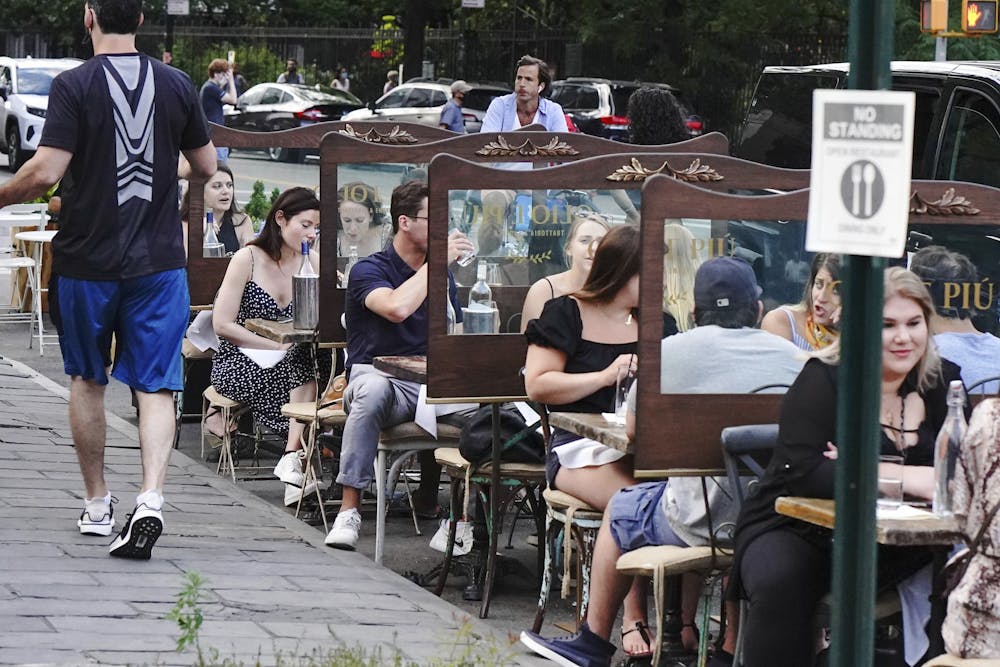
After months of strict social distancing rules, New York has reduced its new cases to a fraction of what they were in April and is still being cautious.
Looking at U.S. numbers as a whole hides what is really going on. Different states are in vastly different situations right now and when you look at states individually, four major categories emerge.
Places where the first wave is ending: States in the Northeast and a few scattered elsewhere experienced large initial spikes but were able to mostly contain the virus and substantially brought down new infections. New York is a good example of this.
Places still in the first wave: Several states in the South and West – see Texas and California – had some cases early on, but are now seeing massive surges with no sign of slowing down.
Places in between: Many states were hit early in the first wave, managed to slow it down, but are either at a plateau – like North Dakota – or are now seeing steep increases – like Oklahoma.
Places experiencing local second waves: Looking only at a state level, Hawaii, Montana and Alaska could be said to be experiencing second waves. Each state experienced relatively small initial outbreaks and was able to reduce spread to single digits of daily new confirmed cases, but are now all seeing spikes again.
The trends aren’t surprising based on how states have been dealing with reopening. The virus will go wherever there are susceptible people and until the U.S. stops community spread across the entire country, the first wave isn’t over.
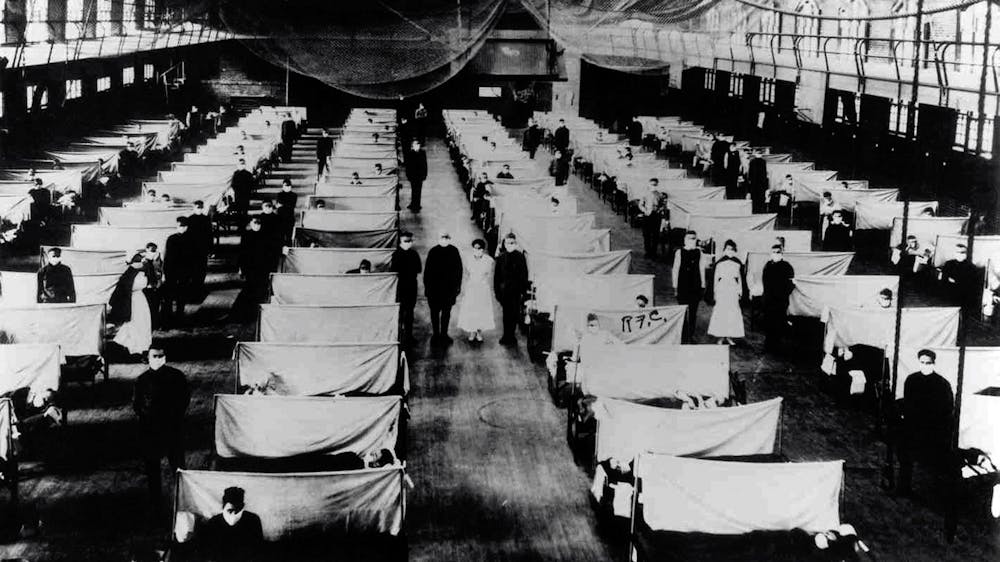
The 1918 flu came back with a vengeance after a mutation and lack of preparedness set the stage for tens of millions of deaths during the second wave.
It is possible – though at this point it seems unlikely – that the U.S. could control the virus before a vaccine is developed. If that happens, it would be time to start thinking about a second wave. The question of what it might look like depends in large part on everyone’s actions.
The 1918 flu pandemic was characterized by a mild first wave in the winter of 1917-1918 that went away in summer. After restrictions were lifted, people very quickly went back to pre-pandemic life. But a second, deadlier strain came back in fall of 1918 and third in spring of 1919. In total, more than 500 million people were infected worldwide and upwards of 50 million died over the course of three waves.
It was the combination of a quick return to normal life and a mutation in the flu’s genome that made it more deadly that led to the horrific second and third waves.
Thankfully, the coronavirus appears to be much more genetically stable than the influenza virus, and thus less likely to mutate into a more deadly variant. That leaves human behavior as the main risk factor.
Until a vaccine or effective treatment is developed, the tried-and-true public health measures of the last months – social distancing,universal mask wearing, frequent hand-washing and avoiding crowded indoor spaces – are the ways to stop the first wave and thwart a second one. And when there are surges like what is happening now in the U.S., further reopening plans need to be put on hold.