Tinier than the teeniest bird, older than T-Rex and perfectly preserved for eternity: scientists have identified a 100-million-year-old flying dinosaur encased in amber that may be the smallest yet discovered.
The skull of Oculudentavis khaungraae was found in a globule of amber in Myanmar, offering researchers a startlingly clear view of its features.
"When I first saw it I was blown away," said Jingmai O'Connor, a paleontologist from the Chinese Academy of Sciences and lead author of the study published in Nature on Wednesday.
"It's pretty exquisitely preserved and really weird looking, with its unique scleral ring (eye bones) and large number of teeth," she told AFP.
The preserved skull is just 7.1 millimetres (less than one-third of an inch) long, likely making it the smallest dinosaur yet discovered. It would have been smaller than the smallest bird alive today, the bee hummingbird.
The team even refer among themselves to the specimen as "Teenie Weenie", O'Connor said.
Despite its miniscule size, researchers believe it hunted insects, using its sharp teeth and large eyes to home in on prey.
Unlike fossils encased in rock, amber specimens still retain their soft tissue, showing scientists their original colour and morphology.
As to whether Teenie is a bird or a dinosaur, O'Connor said the lines were blurry.
"We think it's a bird -- the skull has a shape that only occurs in birds and some dinosaurs," she said,
"However there are no skull characteristics that define birds therefore it could be a dinosaur or even something else."
Writing in a linked editorial, Roger Benson from Oxford University's Department of Earth Sciences said the discovery suggests birds may have evolved miniature body sizes much earlier than thought.
"This indicates that, only shortly after their origins late in the Jurassic period (which lasted from about 201 million to 145 million years ago), birds had already attained their minimum body sizes," he said.
And although it's encased in amber, there's no risk of scientists bringing it back to life, like a certain Steven Spielberg film.
"There are most certainly fragments of DNA preserved inside but we'll never reach 'Jurassic Park'," said O'Connor.
SpaceX founder Elon Musk on Monday dismissed scientists' concerns that his company's Starlink constellation of internet satellites would obscure the view of the night sky, predicting the network "will not cause any impact whatsoever in astronomical discoveries."
Musk is trying to seize control of the future internet space market and has already sent about 300 Starlink satellites into orbit -- with plans to grow that number, potentially up to 42,000.
Scientists raised objections after the initial batch appeared as a train of bright lights shortly after they launched last year, arguing they were a death knell for both optical and radio astronomy.
Speaking at a satellite internet conference in the capital Washington, Musk said his company had already taken measures to reduce their reflectivity.
"I am confident that we will not cause any impact whatsoever in astronomical discoveries, zero," he said. "That's my prediction, we will take corrective action if it's above zero."
He said the issue only occurred as the satellites were "tumbling" as they raised their orbit, and that once they achieved their final flight path, the issue went away.
"I've not met someone who can tell me where all of them are," said Musk. "So it can't be that big of a deal."
But he added SpaceX was working with the science community to reduce the potential for reflection, including painting the antennas black instead of white, and placing a sunshade on the satellites.
The system is due to go live in the northern United States and Canada later this year and expand to global coverage by 2021.
Musk wouldn't be drawn on the cost to users, nor on precise speed, but said it would be enough to stream high definition movies and to play high-end video games without noticeable lag time.
He added that the user terminal would look like a "UFO on a stick" and would not require a specialist to install, unlike other home satellite dishes.
"The box will have just two instructions and they can be done in either order: point at sky, plug in," he said.
The dish would then automatically align itself to a target satellite.
Musk said the network was primarily targeted at a niche market of three to four percent of users who live in remote areas, and was therefore not a threat to traditional telecommunications companies.
He also dismissed the potential impact of next-generation 5G networks on his business model, saying that technology was excellent for high density cities but didn't have the range to do well in rural settings.
By contrast, space internet only works well in sparsely populated environments, he said.
Musk has said he was hoping to generate $30 billion revenue a year, or 10 times what SpaceX is earning from its space launches, and plough the profits back into rocket and spaceship development.
Several rivals are also vying for a slice of the pie, including London-based startup OneWeb and giant US retailer Amazon, whose Project Kuiper is far less advanced.
Health and Human Services Secretary Alex Azar lauded the "fundamentals" of President Donald Trump's "unbelievable" economy on Monday but refused to take questions from reporters.
In a statement made in the White House driveway, Azar spoke about the economy instead of giving an update on the novel coronavirus.
"President Trump has delivered a historically strong economy," Azar said. "The fundamentals in this economy are unbelievable. Whether it's employment or wage growth or productivity or international trade deals, the fundamentals remain what they are."
"President Trump is leading a whole of government response with the vice president helping him on the public health issues that we're facing with the novel coronavirus," he added. "That is his number once concern. In terms of the economy, he and his economic team have the tools to keep this economy going strong."
Before walking away, Azar acknowledged that he knew the reporters standing around him had "a lot of questions."
"I'll see you all later today, I'm sure," he said.
Hosts of Fox News on Monday noted that President Donald Trump is refusing to take his own advice when it comes to preventing the spread of the novel coronavirus.
As Trump arrived in Florida Monday morning, live video showed the president shaking hands with enthusiastic supporters.
"In this era when shaking hands is a no-no for many people, the president is not showing any concerns about that at all," host Jon Scott noted. "He's glad-handing this entire rope line."
"Remarkable!" co-host Sandra Smith agreed. "Here's the president just touched down and the DOW selling off 1,600 points."
Trump recently told Fox News that the practice of shaking hands is not advisable during a pandemic.
"I always felt the concept wasn't good," the president explained to Fox News last week. "You read a lot of medical reports [and] it's not good now."
Less than half of all people in the United States adopt their parents’ political party affiliation, according to new research published in the British Journal of Political Science.The study also discovered some factors that appear to influence whether parents successfully transmit their partisan identities to their children.“Most parents want to raise their children with the ‘right’ values. What is right, of course, depends upon the parent but understanding what factors might aid or harm a parent’s ability to successful transmit their values to their children is important to many, particularly...
The Harvard historian Jill Lepore recounted recently in The New Yorker magazine that when democracies sink into crisis, the question “where are we going?” leaps to everyone’s mind, as if we were waiting for a weather forecast to tell us how healthy our democracy was going to be tomorrow. Quoting Italian philosopher Benedetto Croce, Lepore writes that “political problems are not external forces beyond our control; they are forces within our control. We need solely to make up our own minds and to act.”
And so it is with the coronavirus epidemic. How big will this epidemic be? How many people will it infect? How many Americans will die? The answers to these questions are not written in stone. They are partially within our control, assuming we are willing to take the responsibility to act with commitment, urgency and solidarity.
I am an epidemiologist with eight years of field experience, including time on the front lines of the isolation and quarantine efforts during the 2009 swine flu pandemic. One month ago, I was under the impression that the death reports due to COVID-19 circulation in China were giving us an unfair picture of its mortality rate. I wrote a piece saying that the death rate of an emerging disease always looks bad in the early stages of an outbreak, but is likely to drop once better data become available. After waiting for eight weeks, I am now worried that these new data – data indicating that the virus has a low fatality rate – may not arrive.
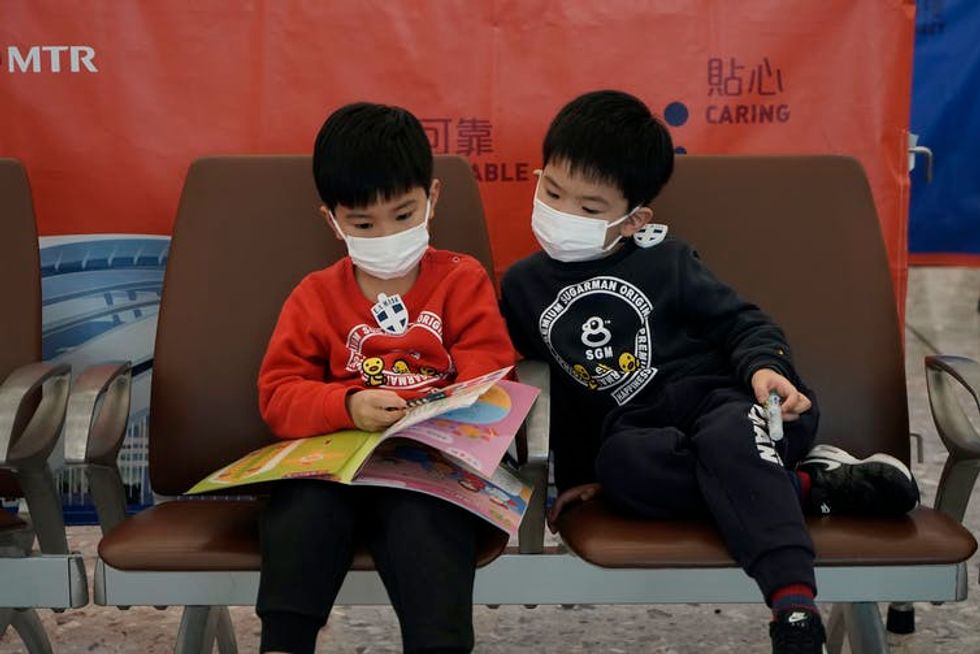
Young passengers wear masks on a high-speed train in Hong Kong, Wednesday, Jan. 22, 2020. At that time, it was hard to know how dangerous the virus would be. (AP Photo/Kin Cheung)
By Jan. 31 2020, China had reported a total of 11,821 cases of COVID-19 and 259 deaths; that’s about a 2% case fatality rate. Two weeks later, the tally had risen to more than 50,000 cases and 1,524 deaths, corresponding to about 3% case fatality (the rise in the case fatality is expected as deaths always get counted later than cases). For an easily transmissible disease, a 2% or 3% fatality rate is extremely dangerous.
However, case fatality rates are computed using the officially reported numbers of 11,821 cases or 50,000 cases, which only include individuals who (a) experience symptoms; (b) decide that their symptoms are bad enough to merit a hospital visit; and (c) choose a hospital or clinic that is able to test and report cases of coronavirus.
Surely, there must have been hundreds of thousands cases, maybe a million cases, that had simply gone uncounted.
First, some definitions from Steven Riley at Imperial College. The infection fatality rate (IFR) gives the probability of dying for an infected person. The case fatality rate (CFR) gives the probability of dying for an infected person who is sick enough to report to a hospital or clinic. CFR is larger than IFR, because individuals who report to hospitals are typically more severely ill.
If China’s mid-February statistic of 1,524 deaths had occurred from 1 million infections of COVID-19 (counting all symptomatic and asymptomatic infections), this would mean that the virus had an infection fatality rate of 0.15%, about three times higher than seasonal influenza virus; this is a concern but not a crisis.
The IFR is much more difficult to estimate than the CFR. The reason is that it is hard to count people who are mildly ill or who show no symptoms at all. If you are able to count and test everybody – for example, on a cruise ship, or in a small community – then you may be able to paint a picture of what fraction of infections are asymptomatic, mild, symptomatic and severe.
A quarantined cruise ship in Japan at the Yokohama Port in Yokohama, near Tokyo, Feb. 9, 2020. Cruise and airline bookings are down as a result of the coronavirus.
Now that new COVID-19 cases are being detected in the U.S. every day, it is too late to stop the initial wave of infections. The epidemic is likely to spread across the U.S. The virus appears to beabout as contagiousas influenza. But this comparison is difficult to make since we have no immunity to the new coronavirus.
On balance, it is reasonable to guess that COVID-19 will infect as many Americans over the next year as influenza does in a typical winter – somewhere between 25 million and 115 million. Maybe a bit more if the virus turns out to be more contagious than we thought. Maybe a bit less if we put restrictions in place that minimize our travel and our social and professional contacts.
The bad news is, of course, that these infection numbers translate to 350,000 to 660,000 people dying in the U.S., with an uncertainty range that goes from 50,000 deaths to 5 million deaths. The good news is that this is not a weather forecast. The size of the epidemic, i.e., the total number of infections, is something we can reduce if we decrease our contact patterns and improve our hygiene. If the total number of infections decreases, the total number of deaths will also decrease.
What science cannot tell us right now is exactly which measures will be most effective at slowing down the epidemic and reducing its impact. If I stop shaking hands, will that cut my probability of infection by a half? A third? Nobody knows. If I work from home two days a week, will this reduce my probability of infection by 40%? Maybe. But we don’t even know the answer to that.
What we should prepare for now is reducing our exposures – i.e., our chances of coming into contact with infected people or infected surfaces – any way that we can. For some people this will mean staying home more. For others it will mean adopting more stringent hygiene practices. An extremeversion of this exposure reduction – including mandatory quarantine, rapid diagnosis and isolation, and closing of workplaces and schools – seems to have worked in Hubei province in China, where the epidemic spread appears to have slowed down.
For now, Americans need to prepare themselves that the next 12 months are going to look very different. Vacations may have to be canceled. Social interactions will look different. And risk management is something we’re going to have to think about every morning when we wake up. The coronavirus epidemic is not going to extinguish itself. It is not in another country. It is not just the cold and flu. And it is not going away.
The discovery of a 14th century underground burial site deep in Gabon's tropical forest may shed light on a little known period in Africa's history.
Hundreds of mediaeval artefacts are scattered with human remains at the bottom of a cave in the southeast of the country, discovered by a French geo-archaeologist in 2018.
"This is a unique discovery in Africa, because human remains are almost non-existent," said Richard Oslisly, leading an expedition financed by the National Agency of National Parks.
The mission is also funded by the local environmental branch of Singapore's palm oil giant Olam International, which is well established in Gabon.
There are no golden platters or diamonds at the end of the 25 metres (82 feet) of rope needed to reach the floor of the cave, but the site named Iroungou is still a treasure trove for scientists.
Almost 30 skeletons have been discovered on three levels, with more than 500 metallic artefacts made mostly of iron and ranging from knives, axes and spear tips to bracelets and collars. Researchers also found 39 pierced teeth from hyenas and panthers.
Oslisly, 69, only began to speak of the discovery a year afterwards, but it has caused a wave of excitement and hope in the regional scientific community.
"This cave will enable us to find out a little more about these peoples of central Africa, largely unrecorded in history," the French researcher said in his Libreville office, full of local antiquities.
- 'Exceptional remains' -
In sub-Saharan Africa, "soils are very acidic, so everything of human and animal origin decomposes very quickly," said Geoffroy de Saulieu, an archaeologist with France's Research Institute for Development (IRD).
"It is exceptional to obtain this kind of remains."
With carbon-14 dating practised on 10 femurs -- or thighbones -- it was possible to date the skeletons in the cave in the 14th century, a worthwhile discovery in itself.
In this part of the world, vestiges of the past are unusual, but that is also partly because archaeological research is generally insufficiently funded and comes late in the day.
The first written texts regarding Gabon came from European adventurers who landed on its Atlantic Coast at the end of the 15th century.
It was not until the 19th century that explorers ventured far inland on territory almost completely covered with forest.
The oral record of indigenous clans and families handed down in villages "doesn't let us go back further than one or two centuries," said Louis Perrois, a French anthropologist who has studied oral tradition in much of Gabon since the 1960s.
When researchers questioned the elders in villages around the Iroungou cave, nobody was aware of the existence of the site. The villagers said they had no idea who the men and women buried there could be.
Molar teeth extracted from skulls have been sent to France for DNA testing. Scientists can also count on a DNA base compiled with saliva data from peoples across central Africa.
Oslisly hopes to "cross-check the data and, perhaps, to find the descendants of these skeletons," with the DNA tools used by linguists.
- Bone diagnosis -
In March, a team of anthropologists and specialists in bone pathology -- people with skills to diagnose illnesses from remains -- were due to go down into the cave.
"We're going to find out more about the diet of the buried people, and the illnesses they have contracted during their lives," says Oslisly, still enthusiastic after 35 years of work in Gabon and Cameroon.
"Above all, we're going to learn what they died of," he added.
Apart from a collective burial site unearthed at Benin City in southern Nigeria in the 1960s, Iroungou is the only cave grave to be found in Africa.
Like the Iroungou skeletons, the bones in Benin City have been dated to the 14th century, an epoch which witnessed the fall of many African civilisations, according to several historians.
Some researchers wonder whether Africa was struck by the Great Plague, over the same decades as it ravaged Europe and Asia. Maybe the Iroungou bones hold an answer.
"In Benin City, the ADN was not saved, but in Iroungou the bones are in very good shape," de Saulieu says.
President Donald Trump's top infectious disease expert told Fox News that regional travel bans are possible in the U.S. to prevent the spread of the coronavirus.
In an interview with Dr. Anthony Fauci on Sunday, Fox News host Chris Wallace asked if the Trump administration would follow the lead of Italy with a regional ban on travel in areas with high concentrations of COVID-19 infections.
"Anything is possible," Fauci admitted. “We have to be realistic. I don’t think it would be as draconian as nobody in or nobody out. But if we continue to get cases like this, particularly at the community level, there will be what we call ‘mitigation,’ where we have to essentially do social distancing, keep people out of crowded places, take a look at seriousness, do you really need to travel, and I think it’s particularly important among the most vulnerable."
Matt Schlapp, chairman of the Conservative Political Action Conference (CPAC), assured viewers of Fox News that President Donald Trump repeatedly "scrubbed" his hands while at the event
During an appearance on Fox & Friends, Schlapp spoke about the coronavirus patient who attended CPAC.
"We had Purell and hand sanitizer stations -- I think over 30 of then all over the conference," Schlapp insisted. "I think everybody was scrubbing down all the time because they realized they were at a very big public event."
Schlapp confirmed that he had incidental contact with the infected person. But he did not say whether it was before or after he shook President Donald Trump's hand.
"I can tell you, when the president was on site at CPAC, he lives by what he tells us," Schlapp explained. "Because I saw him scrubbing down his hands and clean his hands more than once while he was on the premises."
"And I did the same," he added. "My wife was squirting Purell in my hands at every moment."
A Sunday interview with Housing and Urban Development Secretary Ben Carson may have done more harm than good when it comes to assuring Americans that the Trump administration has the coronavirus under control.
In an interview with ABC's George Stephanopoulos, Carson -- who is a former neurosurgeon but not an infectious disease expert -- compared COVID-19 to the common flu.
Stephanopoulos noted that the Grand Princess is scheduled to dock in Oakland this week with infected passengers.
"What plan is in place to deal with the 3,500 people onboard?" the ABC host asked.
Carson, however, declined to reveal the plan.
"The plan will be in place by that time," Carson said. "But I don't want to preview the plan right now."
"Shouldn't you be able to do that?" Stephanopoulos pressed.
"I think it needs to all come from a solitary source, we shouldn't have 16 people saying what the plan is," Carson argued.
The HUD secretary's interview did not inspire confidence on Twitter, where commenters trashed his interview.
Watch the video and read some of the tweets below.
The ATP and WTA announced measures aimed at combatting the spread of deadly coronavirus on Saturday, days before the start of the BNP Paribas Open at Indian Wells, California.
"As the outbreak of COVID-19 continues to cause concern on a global scale, the ATP and WTA have jointly announced a series of precautionary health measures that will be implemented on-site at upcoming events including the BNP Paribas Open in Indian Wells, the Miami Open presented by Itau and WTA's Volvo Car Open in Charleston," a joint statement from the men's and women's tours said.
Under the new measures, players and mascots won't hold hands when they walk on court. Ball kids at the tournaments will be provided with gloves and won't handle player towels or drinks during matches.
Players will be instructed not to distribute used towels, headbands, shirts and sweatbands -- which are sometimes tossed to fans as souvenirs.
Players also won't accept pens, tennis balls or other items to be signed.
"The health and safety of our players, fans, staff and tournament personnel is paramount and, as the outbreak of COVID-19 continues, these are common sense precautions for us to take," the ATP and WTA said.
"We continue to monitor this closely on a daily basis, working with our players and tournaments, as well as public health authorities as the situation evolves globally."
The tours said the measures would be at all events "through the 2020 spring season."
Indian Wells tournament advisers had already announced precautionary measures for the event, including gloves for ball kids, food workers and volunteers taking tickets.
More than 250 hand-sanitizing stations have been placed throughout the facility and common areas will be cleaned daily with an anti-viral application.
The tournament also announced Friday that it would offer refunds, or credit for the 2021 edition, to fans who purchased tickets but don't want to attend.
As of Saturday, 150,000 people in 95 countries had been infected with the virus and 3,556 people had died.
Responding to a report from a Kaiser nurse in Northern California who went public with her inability to get tested for the coronavirus before going back to work with patients, former U.S. Attorney Joyce Vance accused President Donald Trump of having his administration slow-walk the release of testing kits in an effort to tamp down reports of infected Americans.
“As a nurse, I’m very concerned that not enough is being done to stop the spread of the coronavirus,” the unidentified nurse said the statement released by the California Nurses Association labor union. “I know because I am currently sick and in quarantine after caring for a patient who tested positive. I’m awaiting ‘permission’ from the federal government to allow for my testing, even after my physician and county health professional ordered it.”
According to Vance, the slow release of test kits strikes her as suspicious and suggested that the president and members of his administration don't want people tested because they fear the tests will reveal that the epidemic is worse than the White House is letting on.
As Vance wrote, "Why not test for Coronavirus? The only explanation we’ve seen so far is because Trump wants to keep the numbers down. He thinks this helps his chances of re-election. In other words, he cares less about your health than his future. Mass testing is logical, sensible & doable."
During a report on the U.S. government's $8.3 billion package to fight the coronavirus epidemic that was approved by the Senate on Thursday, MSNBC "Morning Joe" host Joe Scarborough expressed dismay at the stunningly small number of test kits available as the health crisis threatens to turn into a pandemic.
According to co-host Mika Brzezinski, "As we reported, experts say many, many people are likely to be infected but are walking around undiagnosed. On Monday the Trump administration said it would have close to a million tests available by the end of the week. Now we're learning the administration will miss that goal by a long shot -- able to provide only 75,000 tests. This is a big problem: 75,000."
"What is going on!?"co-host Joe Scarborough exclaimed. "We're a country of 300 million and getting 75,000 kits out at this late date?"
"The Senate yesterday approving the $8.3 billion emergency spending package the House passed the day before --the vote was one short of unanimous, 96-1 with Senator Rand Paul (R-KY) casting the dissenting vote," Brzezinski continued, before addressing co-host Willie Geist. "Again, Willie, not going to help the problem right now where you have so many people potentially and most possibly walking around undiagnosed and literally absolutely not enough test kits to go around."
"If you listen to people dealing with this on the ground like [New York] Mayor De Blasio, he's pleading we need the test kits and, as you just said, they are not being made available," he replied.