"The excluded small business owners are more likely to be Black and Latinx because of bias in our criminal legal system, and their communities are hardest hit by Covid-19. We won't stop fighting until this economic lifeline is afforded to all."
A coalition of civil rights groups including the ACLU sued the Trump administration on Tuesday for denying coronavirus relief loans to small business owners with criminal records, arguing the restrictive policy violates the law and perpetuates systemic racial injustices by discriminating against people of color.
"The excluded small business owners are more likely to be Black and Latinx because of bias in our criminal legal system, and their communities are hardest hit by Covid-19," ReNika Moore, director of the ACLU's Racial Justice Program, said in a statement. "We won't stop fighting until this economic lifeline is afforded to all."
"As it stands, the SBA blocks the path to economic equality and progress for people who come from underserved communities and who are disproportionately affected by mass incarceration."
—Sekwan Merritt, owner of Lightning Electric
The Small Business Administration (SBA) and the Treasury Department initially barred any small business owner convicted of a felony within the past five years from receiving loans under the Paycheck Protection Program (PPP), which was established by the CARES Act.
The SBA slightly loosened the restrictions (pdf) last week, banning from relief loans anyone who is currently on parole, facing pending charges, or with a felony conviction in the past year.
In their legal complaint against the SBA, the civil rights groups argue that "the criminal-record exclusions are inconsistent with the text and purpose of the CARES Act."
"They tell a sweeping category of small-business owners across the country that, at a time of acute financial fragility, there is no lifeline for them or their employees," the complaint reads.
Sekwan Merritt, a black small business owner who is on parole, said in a statement that "the SBA's discrimination against formerly incarcerated individuals hurts not just those of us who have worked hard to create our own businesses after returning home, but also impacts our families, the people who work for us, and our communities."
"Through my electrical contracting business, Lightning Electric, I want to provide hope and opportunity for folks who were formerly incarcerated," said Merritt. "However, as it stands, the SBA blocks the path to economic equality and progress for people who come from underserved communities and who are disproportionately affected by mass incarceration."
Joanna Wasik, counsel at Washington Lawyers' Committee for Civil Rights and Urban Affairs, said the United States should "celebrate the accomplishments of formerly incarcerated individuals who are contributing to their communities, not shut them out from aid at a time of acute financial crisis."
"The SBA's exclusion compounds the already devastating impacts that communities of color are facing from the Covid-19 pandemic Congress did not provide any exclusions when it passed the CARES Act," said Wasik, "and the SBA has provided no good reason for them."
Correction: A previous version of this story erroneously stated that Sekwan Merritt has a pending charge against him. Sekwan Merritt is on parole, he does not have a pending charge.
Protestors created a ruckus and several were walked out in handcuffs after Tennessee lawmakers failed to pass a resolution honoring the life of 17-year-old Ashanti Posey, ABC6 reports.
Posey, a student at a local high school, was shot to death while sitting in her car back in April.
According to police, Posey was involved in a marijuana sale before her death, and that detail was enough to get Rep. William Lamberth (R) to withdraw his support for the measure.
“I did some research and looked up exactly what led to this young lady’s untimely demise and due to the behavior and I will say choices that she was involved in at the time,” Lamberth said. “I cannot in good conscience vote in favor of this.”
Lamberth's move is what sparked the angry response from protesters. The resolution failed with a 45-to-1 vote, with Lamberth being the sole holdout.
“That is the most astonishing thing I have ever seen on this floor honoring a young woman who died,” Rep. Mike Steward (D) said. “That is the most astonishing thing, outrageous vote I have ever seen on this house floor in over a decade. I’m shocked."
A Black teenager was found hanged outside an elementary school in a case Texas deputies are investigating as a suicide.
The teenage boy was found in a remote corner on Ehrhardt Elementary School property in Spring, and Harris County sheriff's deputies said evidence points to suicide, reported the Houston Chronicle.
Investigators reviewed surveillance video, spoke to neighbors and examined other evidence that they said indicated the teen had killed himself.
The apparent suicide is the second reported this week in Harris County, where Houston police said a Latino man was found hanged early Monday.
That man was inaccurately reported online as a Black man, and social media postings have questioned the investigation of his death.
Houston police said family members described that man as suicidal, and they said they found no evidence of foul play.
Some Republican lawmakers are set to revolt against House Speaker Nancy Pelosi's decision to require all House members wear face masks at committee hearings.
The Washington Post reports that Pelosi decided to tighten restrictions on mask wearing after a group of rebellious GOP lawmakers steadfastly refused to wear them, even as one of their colleagues got infected with COVID-19.
"One GOP congressman who declined to wear a mask at the Capitol has contracted the disease," the Post reports. "On Monday, Rep. Tom Rice (R-SC) announced that he had tested positive for the coronavirus, after appearing with an uncovered face on the House floor two weeks earlier."
Included among the group of rebel Republicans are Reps. Jim Jordan (R-OH), Louie Gohmert (R-TX), and Andy Biggs (R-AZ).
The Post notes that one GOP lawmaker has even framed his opposition to masks in biblical terms.
"It’s part of the dehumanization of the children of God," Rep. Clay Higgins (R-LA) told CNN last month. "You’re participating in it by wearing a mask."
Higgins has also falsely claimed that masks do nothing to prevent the spread of COVID-19 because it's still possible to smell through them.
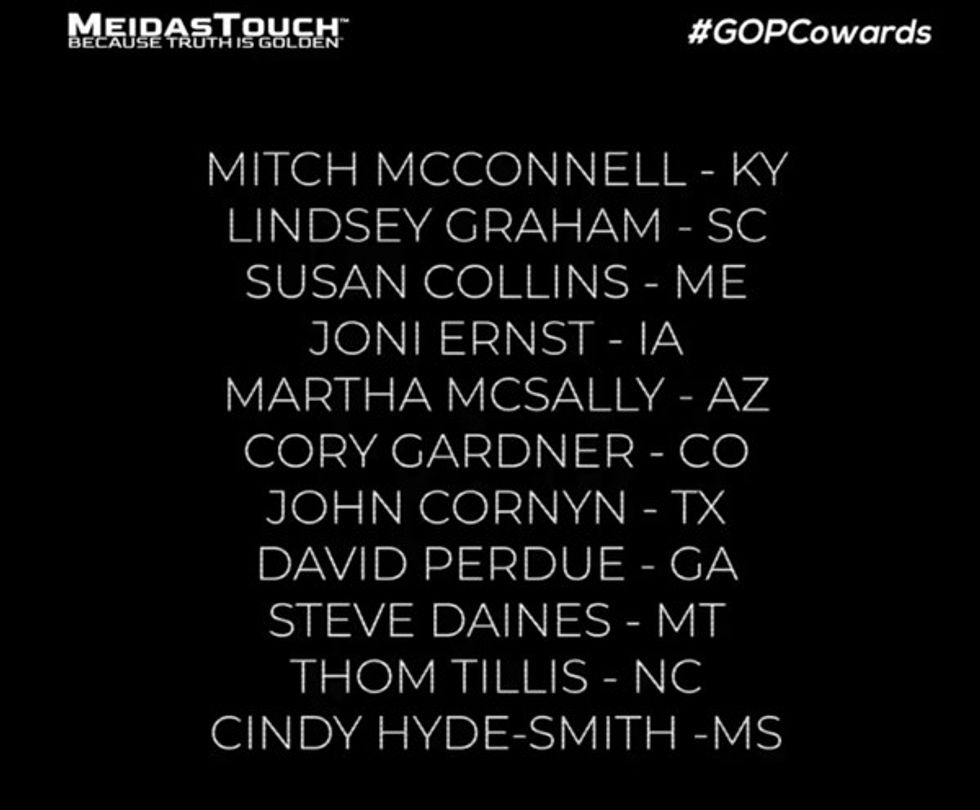
A new video highlighting some of the worst Republican responses to President Donald Trump's actions is going viral, causing #GOPCowards to trend on social media.
Posted just six hours ago by the political action committee MeidasTouch, the video has been viewed nearly 700,000 times.
It opens with commentary about Trump's tweets, then shows news clips of GOP Senators, including Joni Ernst, Martha McSally, Cory Gardner, and Rick Scott refusing to talk to reporters, and other Republicans Senators – like Majority Leader Mitch McConnell, John Cornyn, and Ted Cruz, scurrying past the press.
The video ends with a graphic that reads: "Vote Out the GOP Cowards," then lists the ones they are targeting:
MeidasTouch was founded by three brothers: an attorney who represented Colin Kaepernick, an Emmy award winning video editor who worked for Ellen DeGeneres, and a Marketing Account Supervisor.
Many Americans are surprised to learn that in U.S. presidential elections, the members of the Electoral College do not necessarily have to pick the candidate the voters in their state favored.
Or do they?
This month the Supreme Court will rule on the independent powers of electors, which will determine the meaning of the Electoral College in contemporary American politics.
An American invention
The constitutional system of presidential selection is a set of uneasy compromises worked out at the very end of the Constitutional Convention in 1787.
The framers could not decide whether the choice of a president should be made by Congress or the states.
They also could not agree whether all states should have equal power in the selection, or if more populous states should have more say.
And they didn’t agree whether a state’s choice should be made by local elites (state legislators) or the masses (all of the voters).
In the end, the Committee on Unfinished Parts created a unique governmental structure that compromised on all of these debates. Unlike many contemporary Americans, the founders were comfortable with such compromises and immediately approved the new mechanism of presidential selection.
A small number of citizens called electors would meet in each state to decide the presidency collectively. Congress would enter the picture only if the electors did not reach a majority decision. The number of electors would equal the number of senators and representatives in Congress, which means that small states had greater power than their population would suggest, but still not as much as big states.
As Americans embraced popular democracy in the decades following the founding, most people began to expect a majority vote in the state would determine its choice. In most states, the legislature gives the winning party the duty of choosing electors – who typically are party members who have pledged to vote for their party’s presidential candidate during a public meeting of the Electoral College in December.
When that happens, the state’s Electoral College votes go to the winner of the state’s popular vote. But it is possible for an elector to vote for someone else – which is why there is a case before the Supreme Court.
What are ‘faithless electors’?
When Donald Trump won enough states in November 2016 to be elected the 45th U.S. president, opponents turned to the Electoral College as a last attempt to alter the election’s result. This became known as the Hamilton Electors movement.
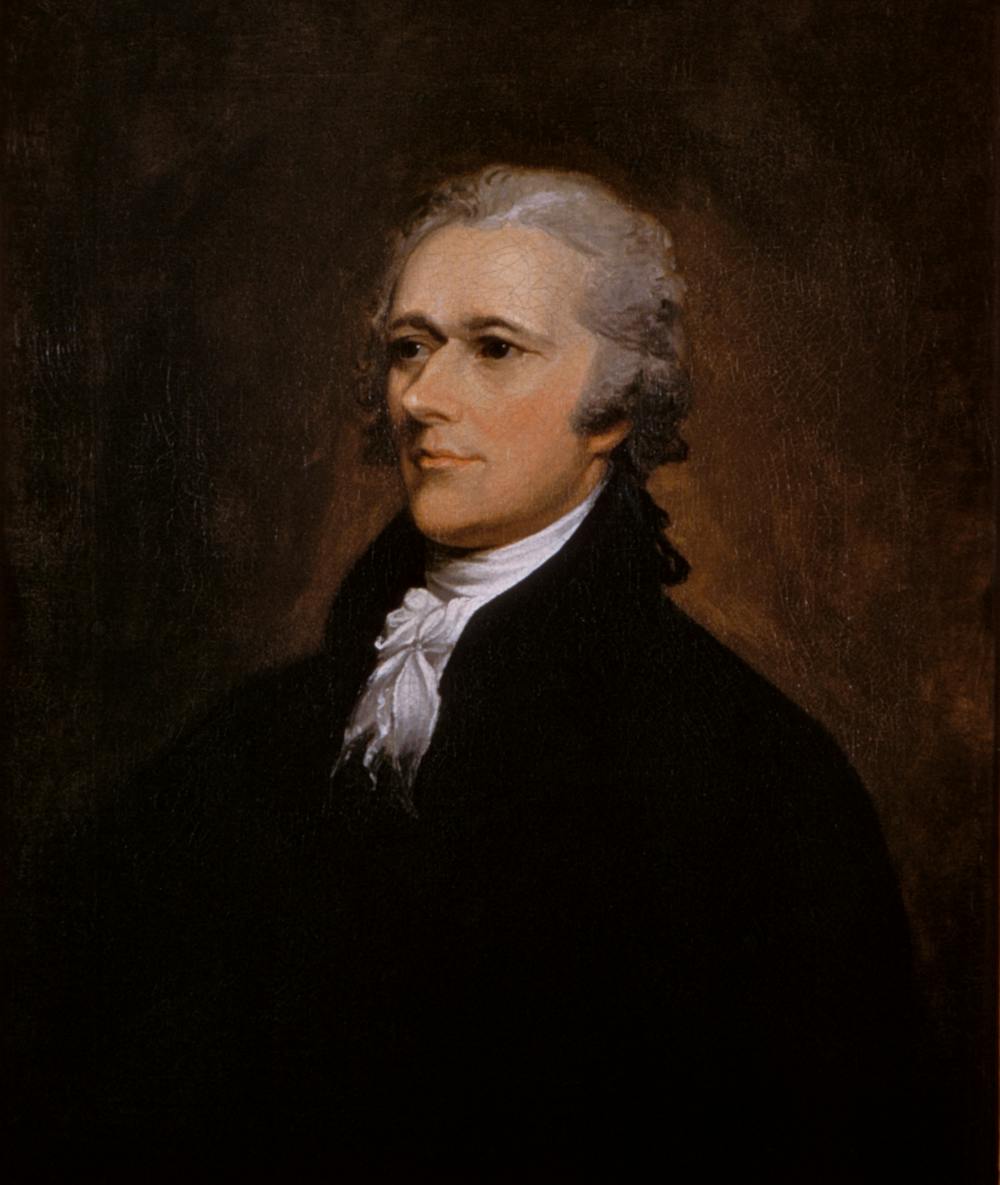
Alexander Hamilton was an advocate of elitist democracy who did not trust ordinary people to vote. He also thought highly of the Electoral College. In Federalist 68, he asserted that “if the manner of it be not perfect, it is at least excellent.”
His reason was that the selection of the president would reflect only “the sense of the people,” but truly be made by “a small number of persons, selected by their fellow-citizens from the general mass.”
In Hamilton’s view, these electors would hold the necessary “information and discernment,” while the masses would likely vote for a president with the “talents for low intrigue, and the little arts of popularity.”
The Hamilton Electors’ explicit goal in 2016 was to convince enough electors to cast “faithless” votes – against the election results of their state – to switch the outcome. Several celebrities, including Martin Sheen, who played the president of the U.S. in “The West Wing,” urged Republican electors to be “an American hero” by blocking Donald Trump from winning.
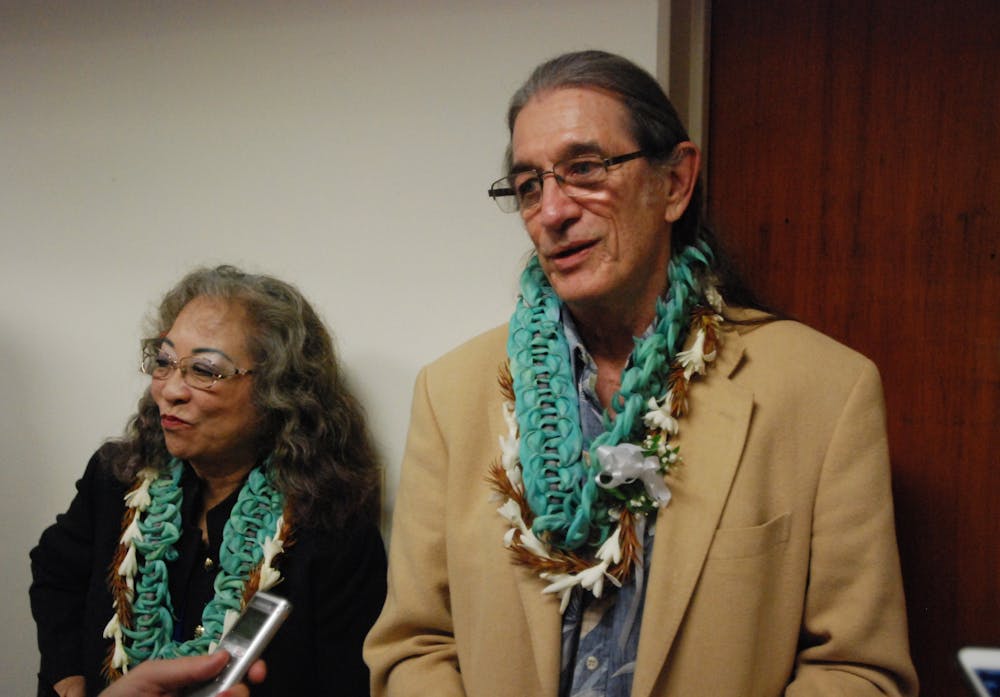
David Mulinix, an elector in Hawaii in 2016, cast his ballot for Bernie Sanders, though Hillary Clinton won his state.
Trump’s official tally in the Electoral College was 304 to Hillary Clinton’s 227. That doesn’t add up to 538 – the total number of electoral votes – because seven electors were unfaithful to their state’s popular decisions. Two Republican electors went their own ways, casting their ballots for John Kasich and Ron Paul. Five Clinton electors also refused to vote with their states’ majorities: Three chose former Secretary of State Colin Powell and one each chose Sen. Bernie Sanders and Native American activist Faith Spotted Eagle.
Those seven electors were not enough to change the outcome. But what if they had been?
Most of the country’s electors did as these six, from Nevada, did in 2016, and voted for the candidate who won their state’s popular vote, regardless of whom they had personally backed.
The outcome in 2020 may be closer than in 2016. If Joe Biden wins a few states that Hillary Clinton did not – say Pennsylvania and Arizona – but Trump holds on to the rest of his 2016 states, the Electoral College outcome will be remarkably close. By my count, it could be 274 to 264 in the Electoral College. If it is that close, even a small number of faithless electors could change the outcome.
If Americans believe on Nov. 3, 2020, that one person has been elected the next president, but find out on Dec. 14 that it is going to be a different person, it is difficult to predict what the public will think – or do.
Faithless electors at the Supreme Court
Even before the 2016 election, some states had tried to limit the discretion of electors. Colorado passed a law that allowed faithless electors to be replaced immediately with an alternate, and Washington imposed a US$1,000 fine for electors who voted differently from the public at large. Two faithless electors – Michael Baca and Peter Chiafalo – challenged the ability of states to restrict their discretion under the Constitution.
The debate at the court is about whether the U.S. still has elements of an elite democracy that cannot be altered by individual states, or if state legislatures can create a popular democracy within their borders by making electors simply registrars of the popular will – even though the constitutional text (and Alexander Hamilton’s plans) may suggest that electors should make their decisions freely.
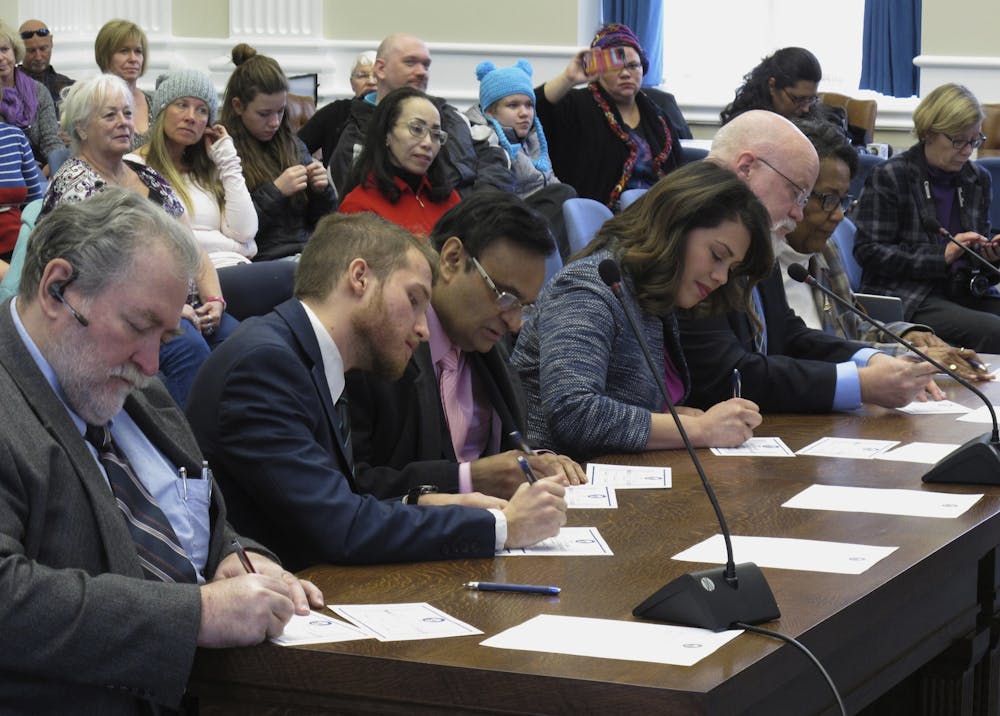
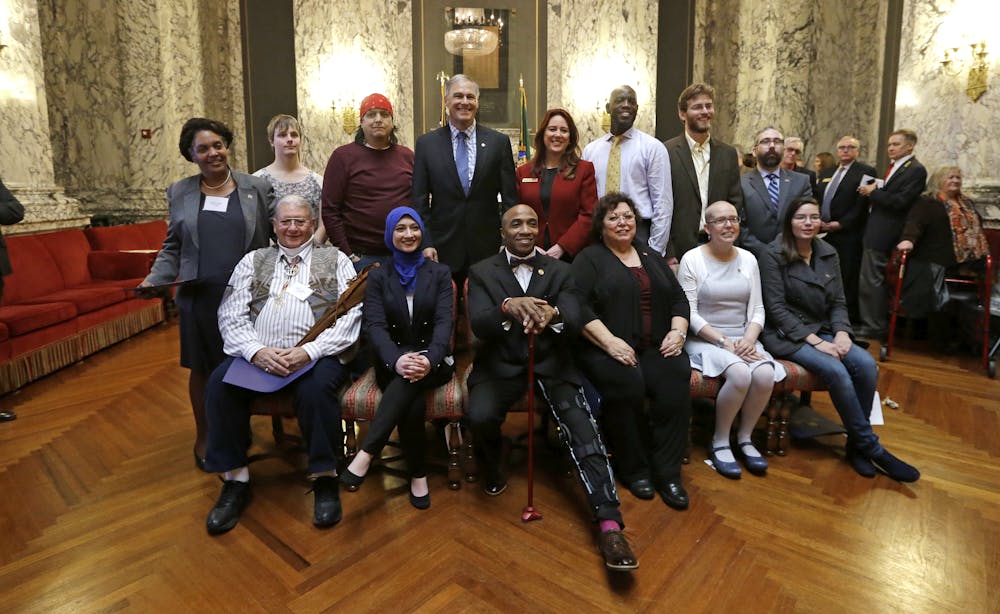
Washington electors and state officials pose after meeting on Dec. 19, 2016. Four of the state’s 12 electors cast their votes for someone other than state popular-vote winner Hillary Clinton.
The supporters of faithless electors are taking a position grounded in the intent of the framers, the usually conservative theory known as originalism.
These two originalist positions divide between a higher regard for the original purpose of electors and the original means of selecting and regulating them.
On the other hand, the usual liberal position – living constitutionalism – is clear. It supports the idea that the U.S. has evolved into a popular democracy regardless of the original intent. Binding electors to the vote of the state is simply the mechanism to achieve the representative elections that most Americans believe the country already has.
If the states win, they will be allowed to set the future rules for how electors may vote. If enough states bind electors, then the election will proceed as the public expects. But if the faithless electors win, the 2020 election results may be unclear far beyond Election Day.
President Donald Trump isn't an outlier -- he's the embodiment of everything the Republican base wants in a leader, according to a new column.
The Daily Beast's Dean Obeidallah knocked down hopes that the Republican Party would become less extreme once Trump exits the stage, and showed there's a crop of Trump-endorsed GOP candidates who are just as unhinged.
"The result this past weekend in Virginia’s 5th congressional district GOP primary," Obeidallah writes, "where first term Rep. Denver Riggleman lost to Bob Good, a Christian-sharia-loving, anti-LGBTQ, anti-immigrant bigot, is just the latest example of where the GOP is heading with or without Trump."
Riggleman, a military vet and member of the right-wing Freedom Caucus, lost to Good, a longtime official at Jerry Falwell’s Liberty University whose campaign centered around his opposition to abortion with no exceptions for rape, incest or even the life of the mother.
"If you think that is out of the step of where the GOP is heading, it’s because you haven’t been paying attention," Obeidallah writes.
Good's views on immigration are even more harsh and cruel that the president's, Obeidallah writes, and he opposes any civil rights for LGBTQ people.
"Now there is a difference between Good and Trump in terms of spewing racist garbage, Obeidallah writes. "Trump unabashedly did that starting the very first day of his 2016 campaign after descending his escalator. When it comes to Good, he let his surrogate do that for him and then refused to denounce him."
Good won the GOP primary with 58 percent of the vote, but he may face a steeper challenge in the general election for the sprawling and right-leaning 5th District that cuts north-south through the center of Virginia.
"If Good loses — and loses badly — it could deter other Republicans from advocating such far-right views," Obeidallah writes. "But history tells us don’t count on it. Trump and Good are not aberrations — they are the manifestations of what the GOP base wants. For that reason, expect to see a lot more of both in the years to come."
George Floyd's brother was expected to speak before the UN Human Rights Council on Wednesday as it holds an urgent debate on "systemic racism" in the United States and beyond.
African countries are pushing for the Michelle Bachelet, the United Nations High Commissioner for Human Rights, to investigate racism and police civil liberties violations against people of African descent in the United States.
Floyd, a 46-year-old black man, died in Minneapolis on May 25 after a white police officer -- since charged with murder -- pressed his knee on Floyd's neck for nearly nine minutes.
Amateur video of the incident sparked demonstrations and calls to address systemic racism in the United States and around the world.
Floyd's brother Philonise is due to address the council via video-link.
Last week he made an emotional plea to the US Congress to "stop the pain" and pass reforms that make officers accountable for brutality.
On Tuesday, US President Donald Trump issued an order to improve policing, calling for a ban on dangerous choke holds -- except if an officer's life is at risk.
However his executive order stopped well short of demands made at nationwide protests against racism and police brutality.
Probe proposal dropped
The draft resolution being debated in Geneva, introduced by the 54 African countries, condemns ongoing "racial discrimination and violent practices perpetrated by law enforcement agencies against Africans and of people of African descent and structural racism endemic to the criminal justice system in the United States" and elsewhere.
But it has been heavily watered down after stark opposition from the US and some of its allies to an initial text presented on Tuesday.
The new draft dropped an earlier demand for the establishment of an independent international commission of inquiry -- one of the UN's highest-level probes, generally reserved for major crises like the Syrian conflict.
Instead it now calls on Bachelet and UN rights experts to "establish the facts and circumstances relating to the systemic racism, alleged violations of international human rights law and abuses against Africans and people of African descent" by law enforcement in the US and beyond -- especially those incidents that resulted in deaths.
The aim, it said, was "to ensure the accountability of perpetrators and redress for victims".
'Break old patterns'
Andrew Bremberg, the US ambassador to the UN in Geneva, said his country was transparent in its commitment to addressing racial discrimination and injustice, citing Trump's executive order.
"As the world's leading advocate for human rights, we call upon all governments to demonstrate the same level of transparency and accountability that the US and our democratic partners practice," he said.
"Sadly, there are too many places in the world where governments commit grave violations of human rights and practice systematic racial discrimination while many of those assembled in Geneva are silent."
Trump's executive order encourages de-escalation training, better recruitment, sharing of data on police who have bad records, and money to support police in complicated duties related to people with mental or drug issues.
"We have to break old patterns of failure," he said.
Trump said he would use access to federal funding grants as leverage to persuade departments "to adopt the highest professional standards."
US policing is mostly run at state and local level.
'Dismantle racist institutions' call
Meanwhile 22 African leaders within the UN agencies, including World Health Organization chief Tedros Adhanom Ghebreyesus, penned a joint opinion piece voicing outrage at pervasive "injustice of racism".
"We owe it to George Floyd and to all victims of racial discrimination and police brutality to dismantle racist institutions," they wrote.
"It is time for the United Nations to step up and act decisively."
The UN Human Rights Council's 47 members are due to vote on the resolution following the urgent debate, which was set to begin Wednesday and conclude Thursday.
The Trump administration withdrew the United States from the council two years ago.
Wednesday will mark only the fifth time in the council's 14-year history that it has agreed to hold an "urgent debate", which is like a special session, but within a regular session of the council.
People of higher status are more likely to think that those who disagree with them are stupid or biased — even when their high status is the result of a random process. That’s the main finding from new research published in Personality and Social Psychology Bulletin.The findings could help explain why wealthier individuals tend to be more politically engaged than the less wealthy.“We were initially interested in this topic because we wanted to try to make sense of two observations we had: (1) economic inequality has been rising to historically high levels, and (2) political discourse is becomi...
CNN investigative correspondent Drew Griffin on Wednesday took the lid off the so-called "Boogaloo" movement that is showing up to Black Lives Matter protests heavily armed.
During a segment about Air Force Staff Sgt. Steven Carrillo, a self-identified member of the Boogaloo movement who was charged this week with both murder and attempted murder, Griffin explained what he's learned from speaking with other members of the movement.
"I've talked to some of these guys, they're very hard to pin down on what their actual beliefs are, other than they very much believe in the power of their guns, their loaded firearms," he explained. "They are calling for civil unrest, a civil war, or they're preparing for one, it's just unclear against whom."
Griffin also detailed Carrillo's ties to the movement.
"When they finally did make the arrests, according to the indictment, they found on his social postings messages that were connected to this Boogaloo movement," he explained. "He had a patch on his clothing that identified with the Boogaloo movement, which has kind of a Hawaiian flair to it. And on the... car that he had carjacked, he wrote some Boogaloo messages in blood on the hood of that car."
One of President Donald Trump’s Florida golf clubs has applied for rent relief from Palm Beach County.
The finance director for Trump International Golf Club complained that the coronavirus pandemic and the county's shutdown order had a "significant impact" on the private club's income, and asked for a deferment on the $88,338 monthly rent it pays to lease public land, reported the Palm Beach Post.
The county and its Department of Airports, which hold the leases on Trump’s golf club on airport property, have not taken action on the June 5 request, and the club has paid rent through June.
Trump signed a 99-year lease with the county in 1996 and 2002 after a lengthy lawsuit over the public land, and rent relief for complex leases such as that one must be approved by the county commission.
The club, which is near Mar-A-Lago, is the one most frequently visited by the president of the three courses he owns in South Florida, including Trump National Doral and Trump National Golf Club in Jupiter.
Host Alisyn Camerota started off by drawing attention to an editorial that Pence wrote for the Wall Street Journal in which he downplayed fears about the surging numbers of cases in states such as Florida, Texas, and Arizona.
"Vice President Mike Pence, the head of the coronavirus task force, published an op-ed Tuesday that doctors say is riddled with misinformation," Camerota explained. "Here are the facts: This morning, 21 states are reporting an increase in new cases. Ten of those -- ten states are seeing a spike of 50 percent or more. Florida, Texas, and Arizona are setting records for most cases in a single day. Arizona and Texas also reporting a spike in hospitalizations, meaning more people are getting seriously sick."
CNN reporter Rosa Flores then called out Pence for touting Oklahoma, where President Donald Trump is scheduled to hold his first campaign rally in months, as a major success story.
"The truth is, Oklahoma has seen newly reported cases increase since late May," she explained, and then cited an unnamed Centers for Disease Control and Prevention official who accused Pence of "cherry picking" positive data.
President Donald Trump and his most trusted campaign officials have turned to the Republican establishment for advice as his 2020 re-election chances sink under the weight of the coronavirus pandemic and the resulting recession, but the candidate himself is finding it hard to break his old habits.
The president, his son-in-law Jared Kushner and campaign manager Brad Parscale have reached out to GOP strategist Karl Rove and other establishment figures to enlist support from groups backed by the Koch brothers and the Chamber of Commerce, reported Politico.
“Karl Rove is a smart guy and he knows that if you sit by and let Trump go off the deep end with crazy tweets and an arena show, you’re just killing our Senate guys,” said one source involved in the campaign.
Trump ran as an anti-establishment figure in 2016, but dismal poll numbers for both himself and GOP senators in key states has forced him to suck up to some of the Republicans he once disdained.
“We want to make sure we’re keeping people happy,” one Trump campaign official told Politico. “Many of them are TV regulars and have a lot of experience in politics.”
Kushner and Parscale regularly consult former Republican National Committee co-chair Bob Paduchik, lobbyist David Urban, former Mitch McConnell adviser Josh Holmes and Republican senators Tim Scott (R-SC), Todd Young (R-IN) and David Perdue (R-GA).
The president, for his part, spends hours on the phone each week seeking advice from his personal friends, conservative broadcasters and former staffers, and both he and Vice President Mike Pence remain in contact with Pence's former chief of staff Nick Ayers and ex-campaign officials Corey Lewandowski and David Bossie, and former campaign adviser Jason Miller has returned as a senior adviser.
“This campaign is no different from 2016, in that it’s still going to be built from what the president is going to do,” said one senior White House official. “It was a very candidate-driven campaign in 2016, and it’s going to be the same here, but you have a lot of people who want to be part of the team and it’s a bigger tent than it was before.”
“If they want to be part of it, we have the resources now to make that happen,” that official added.